Debut Of A Rediscovered Masterpiece Brandywine Museum Of Art To Present Jasper Cropsey Painting Not Seen In U.S. In Over 150 Years
November 07, 2025
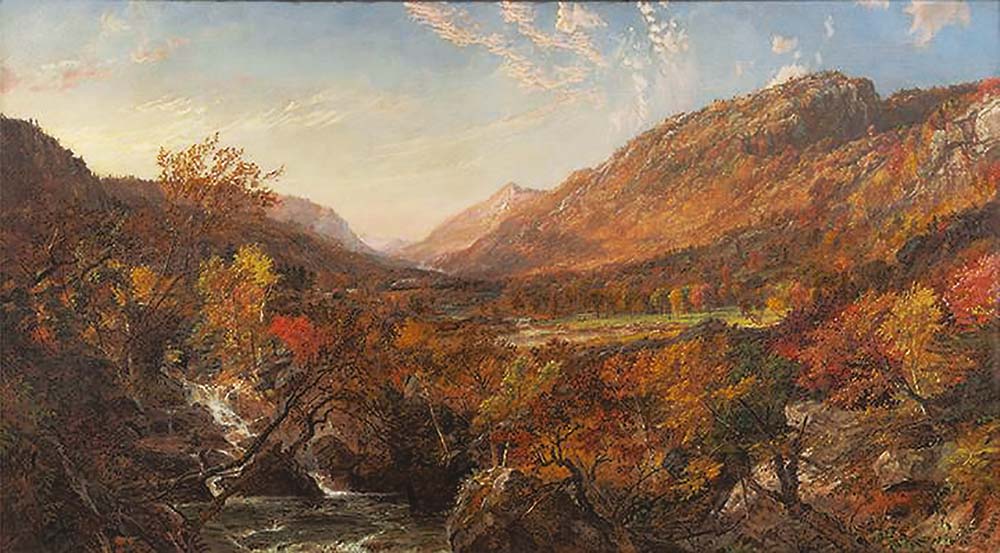
The Brandywine Museum of Art in Chadds Ford, Pa., is excited to present the worldwide museum debut of a rediscovered masterpiece not seen in the United States since it was painted over 150 years ago. The painting, Autumn in the Ramapo Valley, Erie Railway, is a monumental masterwork by Jasper Francis Cropsey (1823-1900), one of the luminaries of the Hudson River School of artists. Previously held in British private collections since 1873, this painting was recently acquired by the J. Jeffrey and Ann Marie Fox Foundation for American Art. The chance to share this important artwork with the American public for the first time in 150 years inspired Brandywines special exhibition, Cropsey, Wyeth, and the American Landscape Tradition, currently on view through May 31, 2026. Following the paintings global museum debut at the Brandywine, it will travel nationally to venues across the United States through 2028. Autumn in the Ramapo Valley, Erie Railway was originally commissioned by James McHenry, an Irish-born transatlantic businessman who invested in a number of American railroads, to commemorate his amassing a majority stake in the Erie Railroad. Up until now, this painting has been hidden away in McHenrys and other British private collections since being shipped to England in the fall of 1873. We searched for a larger scale masterpiece by Cropsey for over 12 years and had to act decisively to acquire this painting with our initial decision based on a condition report and descriptions of the painting from period newspapers, said Jeff and Ann Marie Fox. It is an honor that curators from the Brandywine and other museums concur that it is an extraordinary painting with an equally fascinating story whose return to the United States is being celebrated during the countrys 250th birthday. Their foundation collection includes exceptional examples of works by significant American artists of the 19th and 20th centuries, ranging from Thomas Cole to Georgia OKeeffe. The 7-foot-wide painting is the centerpiece of the Brandywines exhibition, Cropsey, Wyeth, and the American Landscape Tradition, a focused appraisal of the complex art of American landscape painting through the varied holdings of the Brandywine Museum of Art and the Wyeth Foundation for American Art collections. Autumn in the Ramapo Valley, Erie Railway is a revelation to historians of American art: a survivor of a moment in which art and industry were entangled in fascinating ways and artists like Cropsey, Albert Bierstadt, and Frederic Church were in competition for new fortunes being spent on imposing paintings of the sources of their wealth, said Brandywines William L. Coleman, Ph.D., the exhibitions curator and director of the Wyeth Study Center at the museum, with a scholarly background in the Hudson River School. We are thrilled that this painting by an American artist of a quintessentially American landscape finally finds its rightful place on an American museums wall for the first time in the paintings history. Autumn in the Ramapo Valley, Erie Railway, an example of the great picture tradition, is the work of a mature artist tackling sublime, autumnal wilderness in dialogue with the booming railroad business, a frequent subject. Commissioned by a British railroad investor with controlling interests in the railway depicted, the painting naturalizes infrastructure and celebrates the feats of engineering that allowed it to cross such rugged terrain. It also illustrates the extent to which international markets existed for American art, even at this early date. The work received significant attention from American newspapers at the time Cropsey was painting it before it receded from view into private hands for the intervening 150 years. This exceptional artwork clarifies the sheer ambition, energy, and expense that were devoted to depicting the natural world in the 19th-century United States, a phenomenon in which the Brandywines collection is also rich. The fact that its subject matter is a valley on the New Jersey-New York border makes it all the more relevant for dialogue with depictions of similar regional subjects in the Brandywines collection. In addition to Cropsey, landscapes by artists including Alfred Thompson Bricher, Albert Bierstadt, William Trost Richards, John Frederick Kensett, Mary Blood Mellen, and Martin Johnson Heade, among others, are included in the exhibition. The exhibition also continues the story of the landscape tradition with the artists that followed Cropsey. Through key works in the Brandywine and Wyeth Foundation of American Art collections, a clear line of descent traces the further development of American landscape art, via Winslow Homer, George Bellows, and N.C. Wyeth, to an especially rich flowering in the works of Andrew Wyeth. Archival evidence demonstrates the depth of his engagement with the history of landscape art, including specific lessons in composition, allegory, and the aesthetic potential of industry that Andrew Wyeth learned from the Hudson River School. Through a variety of works in watercolor and tempera, many of which have never been exhibited before, the story of the rich American landscape tradition continues, and intriguing commonalities between the artists of the Hudson River School and Wyeth emerge. After its debut presentation at the Brandywine, Cropseys Autumn in the Ramapo Valley, Erie Railway will make a tour to the following institutions: Dixon Gallery & Gardens, Memphis, Tenn., from Sept. 6, 2026 to Jan. 10, 2027; Speed Art Museum, Louisville, Ky., from February 2027 to August 2027; Rockwell Museum, Corning, N.Y., from September 2027 to February 2028; Georgia Museum of Art, Athens, Ga., from March to June 2028; and Newington-Cropsey Foundation, Hastings-on-Hudson, N.Y., beginning July 2028. For more information, call 610-388-2700 or visit www.brandywine.org/museum.
Share & Print






SHARE
PRINT