Divine Egypt On View At The Met Powerful Imagery Of The Gods Of Ancient Egypt On Display
October 17, 2025
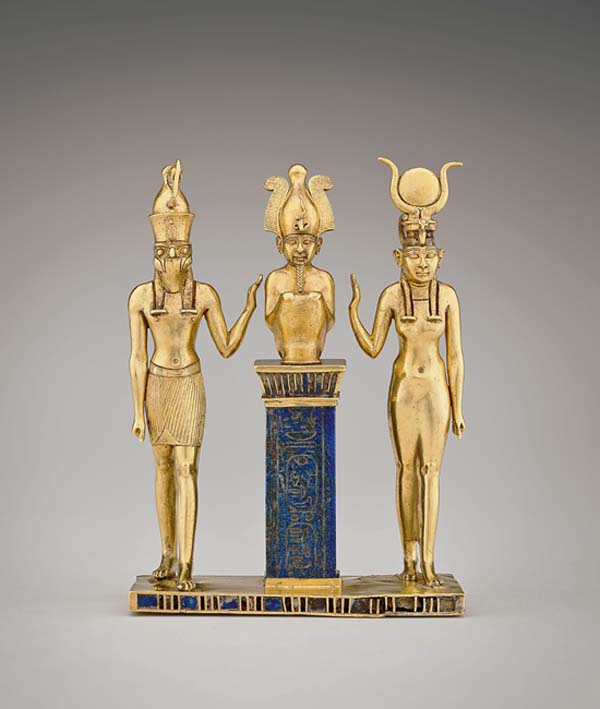
Divine Egypt at The Metropolitan Museum of Art, the first major exhibition of Egyptian art at the museum in over a decade, will explore how images of gods in ancient Egypt were experienced not merely as spiritual depictions in temples, shrines, and tombs but were the instruments that brought the gods to life for daily worship, offering ancient Egyptians a vital connection between the human and divine worlds. Opening on Sunday, Oct. 12, the exhibition will bring together over 200 spectacular works of art to examine the imagery associated with the most important deities in ancient Egypts complex and always-expanding constellation of gods. Over more than 3,000 years, the Egyptian peoples belief system grew to include more than 1,500 gods with many overlapping forms and traits. Divine Egypt will feature impressive works of art, ranging from monumental statues to small elegant figurines in gleaming gold and silver and brilliant blue faience, that represent 25 of ancient Egypts principal deities, including the stately falcon-headed Horus, the potentially dangerous lion-headed Sakhmet, the great creator-god Re, and the serene mummiform Osiris. The exhibition will reveal the ways in which subtle visual cues, like what a figure wore, how they posed, or the symbols they carried, helped identify them and their roles. The exhibition is made possible by The John A. Moran Charitable Trust. Additional support is provided by the Kelekian Fund, Alaina and Stirling Larkin, and Norby Anderson. Divine Egypt will immerse visitors in the breathtaking imagery of the most formidable ancient deities and expansive universe of the Egyptian gods, said Max Hollein, The Mets Marina Kellen French director and chief executive officer. The museums galleries for Egyptian art are among the most beloved by our millions of yearly visitors, and this dazzling exhibition brings together some of our most exquisite works with loans from leading global institutions for an exceptional, once-in-a-lifetime exhibition of ancient Egyptian art. The exhibition will include magnificent works of ancient Egyptian art that have never been exhibited together before, many of them on loan from institutions such as the Museum of Fine Arts, Boston; the Muse du Louvre, Paris; and the Ny Carlsberg Glyptotek, Copenhagen. There will also be over 140 works from The Mets own iconic Egyptian art collection. Highlights range from impressive sculpture to a striking pectoral in gold and lapis (the substances that the bodies of gods were believed to be made of) to detailed metal and wood sculptures. A solid gold statue of the god Amun will adorn a re-creation of a divine barque, a type of boat that held the principal deity of a temple and would be paraded through the streets during festivals so that people could commune directly with the god. Each section of the exhibition will provide an immersive opportunity to examine the ways in which the kings and people of ancient Egypt recognized and interacted with their gods. The ways in which the ancient Egyptian gods were depicted are vastly different from the divine beings in contemporary religions and therefore are intriguing to modern audiences, said Diana Craig Patch, Lila Acheson Wallace curator in charge of Egyptian art. The identity of an ancient Egyptian god may at first seem easy to recognize, but looks can be deceiving, as one form can be shared by many deities. Across more than 3,000 years of history, gods, attributes, roles, and myths were rarely dropped from use, yet the Egyptians of the time had no difficulty understanding and accepting the resulting multiplicity. Through hundreds of spectacular objects, Divine Egypt will allow visitors to understand the complex nature of these deities and help translate the images that were needed to make the inhabitants of the celestial realm available to ancient Egyptians. By focusing on the imagery associated with many of the most important and powerful deities in ancient Egypt, the exhibition will reveal the multifaceted nature of ancient Egyptian religion as well as the ease with which ancient Egyptians connected with their complicated divine landscapes. Some deities deceptively employed the same imagery with the result that one form could be shared by many gods, while in other cases the roles of deities would expand or change over ancient Egypts long history, with one god taking on many forms. The evolution of this landscape over time created deities with numerous roles often having a different representation for each manifestation. Hathor, for example, can appear as a cow, a woman wearing a headdress of horns protecting a sun disk, or a human-headed snake, while some gods maintained consistent forms over thousands of years, like Ptah, who is almost always mummiform and wears a cap. Divine Egypt will also look at how two categories of society interacted differently with the gods: the Pharaoh and high priests had access to the gods in daily temple rituals, while non-royal Egyptians were not permitted to enter the inner sanctuaries of the great temples where the deities came to Earth and inhabited their images. Through objects of private devotion, including donations to offering tables and shrines in temples and images of deities found in homes and villages, the people of Egypt could find support from their gods daily. The exhibition will conclude with artifacts relating to the transition to the next life, a reality shared by Egyptians of all rank, with depictions of the gods who together oversaw each persons passage from this world to the next: chief god of the underworld, Osiris, supported by his sisters, Isis and Nephthys, and Anubis, the canid-headed god who supervises the embalming process. Divine Egypt is curated by Diana Craig Patch, Lila Acheson Wallace curator in charge of Egyptian art at The Met, with Brendan Hainline, research associate, department of Egyptian art. A fully illustrated catalogue will accompany the exhibition and be available for purchase from The Met Store. The catalogue is made possible by the Kelekian Fund. Additional support is provided by Patricia A. Cotti. Education programs are made possible in part by the CORA Foundation. To learn more, visit www.metmuseum.org.
Share & Print






SHARE
PRINT