
Early 19th-Century American Marbled Slip Decorated Red Earthenware
By Justin W. Thomas - August 14, 2026
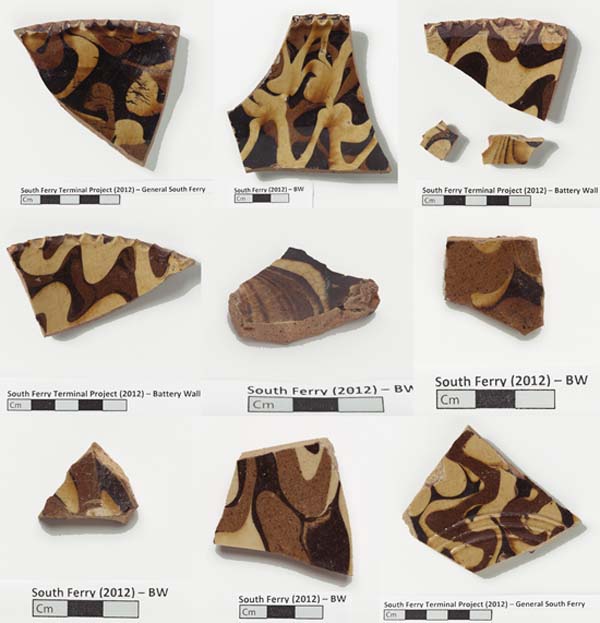
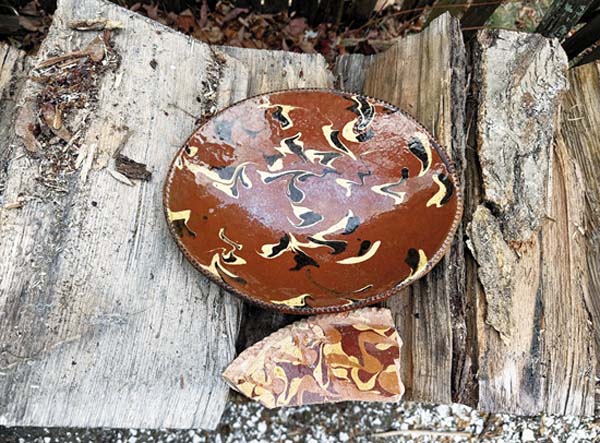
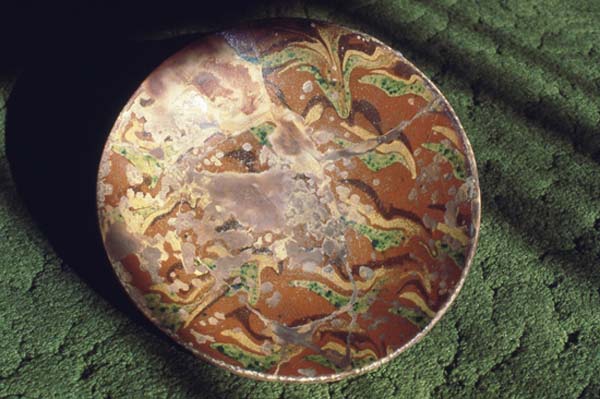
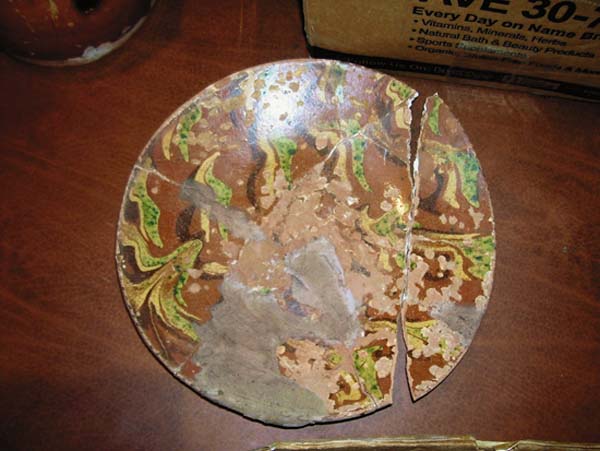
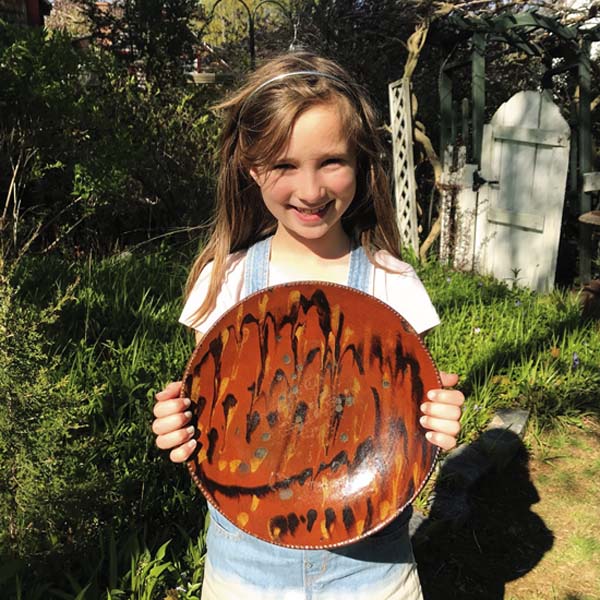
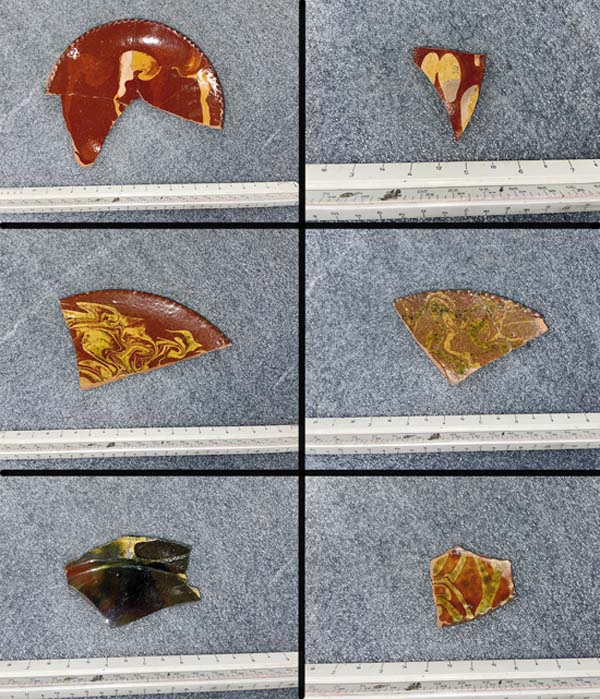
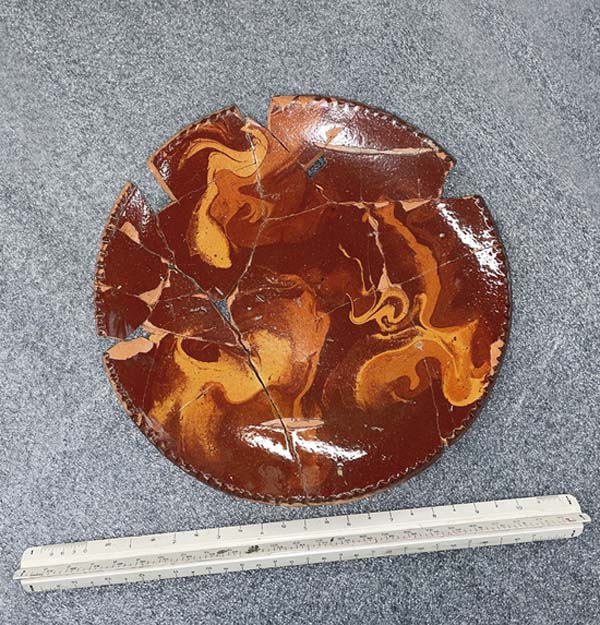
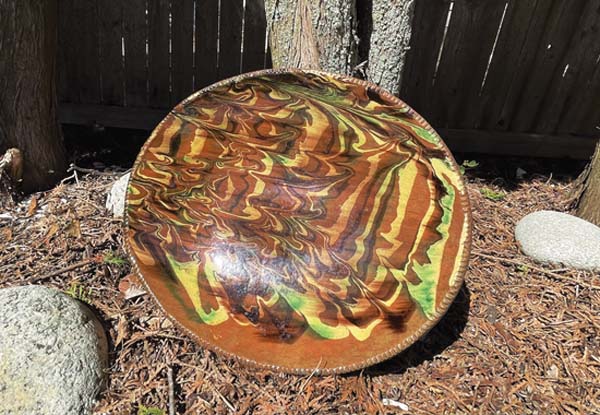
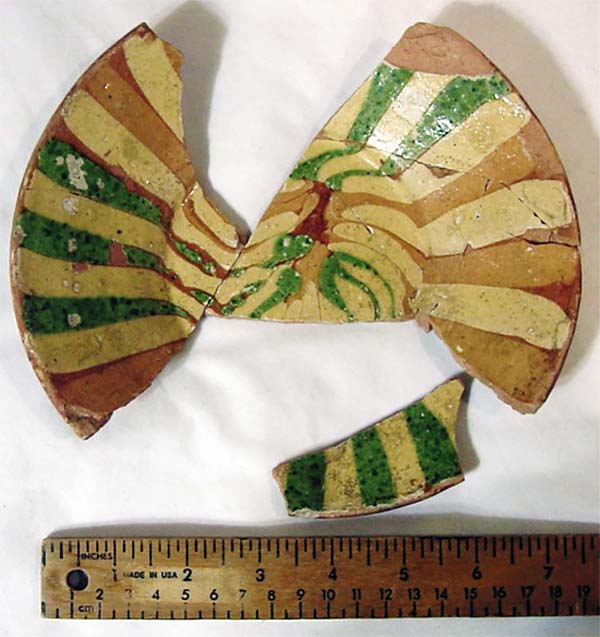
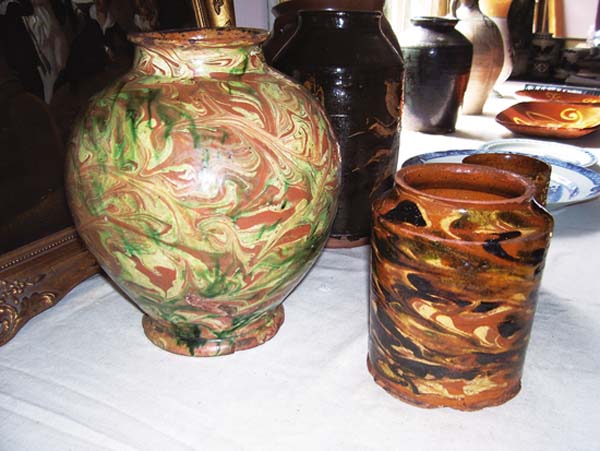
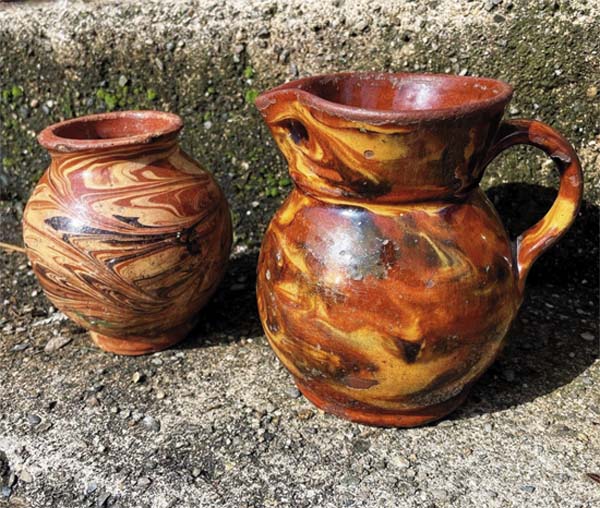
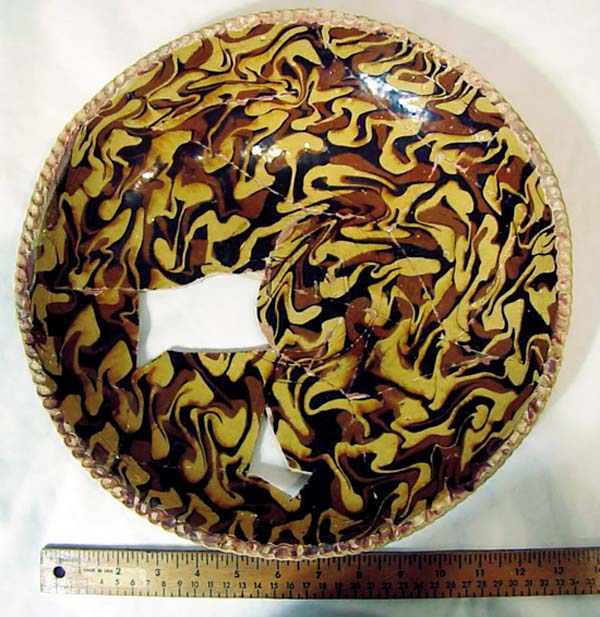
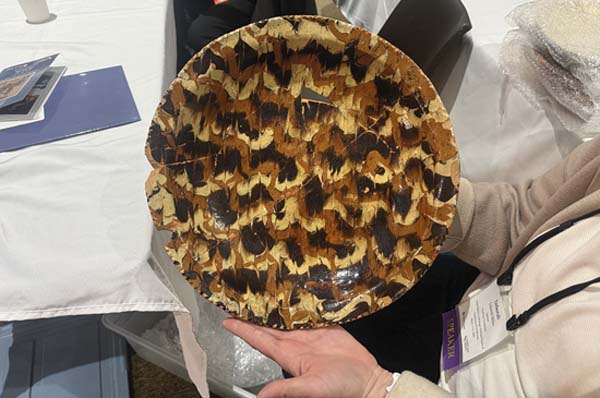
While visiting New York City with my niece Alexis, a friend gave us an intriguing 18th-century English slip-decorated earthenware sherd with a marbled design that had been recovered decades ago along the Hudson River in Manhattan. This is a type of pottery that has been found in various ca. 1670-1785 archaeological contexts in Manhattan, although it has also been recovered by archaeologists from many places in New England, including the Boston area, coastal New Hampshire and Maine, and other areas along the eastern seaboard, such as Philadelphia, etc. Marbled slip decoration is a decorative technique where liquid clay of two or more colors is layered and manipulated on a pottery surface to create a variegated design that appears like the veins found in natural marble or stone. The marbled look is achieved through joggling (the physical act of shaking or tilting the vessel) or by using tools like combs to swirl the wet colors together before they set. The technique dates back centuries, although it was popularized in Staffordshire, England, in the 17th and 18th century for a global market. This type of decoration was also produced on more refined European ceramics in the 18th and 19th century, as well as other pottery, such as marbled red earthenware produced in northern Italy in the 17th century, which has been recovered from various archaeological contexts in New England, especially a large assemblage found in the Boston area and Plymouth, Mass. Interestingly, marbled slip design is a style that was also produced in America in the 18th and 19th century, although it is unclear if there is any direct connection to British earthenware manufacturers. There were various forms produced, but the most interesting examples are likely a group of dishes, plates and platters, all made in the American northeast in the late 18th and/or early 19th century. These American examples typically utilized two or three colors of slip. Some of these slip decorated dishes are very similar in design to ones produced in England in the late 17th and 18th century. For instance, one of those examples was previously owned by John Gordon (1921-2003), an antiques dealer and collector in New York City, who became a key figure in the Americana world in the late 20th century, attracting such names as Andy Warhol (1928-1987) and the Rockefellers. This type of American production is also found in various museums today, such as the National Museum of American History at the Smithsonian Institution in Washington, D.C.; Winterthur Museum in Delaware; and the Museum of Fine Arts, Boston. However, there has never been a clear answer as to where the dishes, plates and platters were produced; unrelated forms with similar decorations are known from Pennsylvania, along with other locations in the Mid-Atlantic region and the South. The easiest answer to where the American examples were produced is Norwalk, Conn., seeing that some of the oval platters are comparable to documented slip decorated shapes from that production center. But archaeological evidence makes this a bit more of a complicated subject since these types of marbled wares have been recovered from different locations on Long Island in New York, as well as evidence of marbled wares having been produced at the ca. 1818-1831 Nathaniel Rochester (1752-1831) Pottery in West Bloomfield, Ontario County, N.Y. Although the archaeology collected at the Rochester Pottery seems to be different than most of the known dishes, plates and platters. Interestingly, Absalom Day (1770-1843) was not necessarily the first potter in Norwalk, but he was a pivotal figure, who arrived from New Jersey about 1793, working for Asa Hoyt (1744-1806), eventually taking over his business. Some of Days known early production appears to incorporate elements reminiscent of English design, while Day also trained some of the Norwalk potters, like Asa E. Smith (1798-1880), who took over the business in 1825 and continued the tradition. Another potter trained by Day was John Betts Gregory (1782-1842), who was born in Norwalk in 1782, later working as a red earthenware potter on Long Island and Clinton, N.Y. According to Reverend Charles Melbourne Sellecks (1831-1909) 1896 book, titled Norwalk, Day learned his trade (potter) of Absalom Day of Old Well (neighborhood in Norwalk). After his marriage to Olive (1786-1883), he had a good business offer from Huntington, Long Island, which he accepted. He afterward established a pottery in Clinton, Oneida County, N.Y., which required a building, 140 by 40 feet, for his operations. He returned in 1831 to Norwalk and bought from Samuel Hanford Half-Mile Isle, paying $325. There, he built a kiln for the burning of earthenware and stoneware. The kiln was erected in 1832 by masons Lewis and George Raymond of Old Well. The business was here kept up until 1840. Gregory died July 22, 1842. Gregorys known production from Clinton includes a variety of multi-colored slip-script decorated advertising and religious dishes, utilizing similar colors, as some of the known marbled wares. The shapes of Gregorys press-molded plates and platters produced in Clinton are also like the press-molded examples known from Norwalk. But the most interesting context of the archaeological artifacts are two marbled plates recovered from separate contexts on Long Island, perhaps suggesting that this was an early type of local production possibly related to Gregorys tenure at the Huntington Pottery. One of those examples was recovered from a foundation hole on central Long Island in the 1970s, which was not far from the location of the Huntington Pottery, where Gregory worked in the early 1800s. The second plate was recovered from an early 19th-century context on Shelter Island, located on the eastern end of Long Island. This type of design on American red earthenware was not exclusive to just dishes, although these types of objects might be the most interesting of any of the known marbled wares in existence today. There are also other forms that could be related, including a small pitcher that was discovered years ago in New England. Nonetheless, the production of marbled slip decorated wares continued with other American red earthenware manufacturers throughout the 19th century, including the slip decorated wares produced at the Charles A. Lawrence (1829-1904) Pottery in Beverly, Mass., after 1860. This technique has also been recovered from 18th century contexts of local production in Philadelphia; North Carolina; and Hagerstown, Md., among other areas. But overall, the use of contrasting colors in this type of design created a visually striking appearance that can be considered among the most dynamic types of slip design produced anywhere in America. Sources Erickson, Michelle and Rob Hunter. Making a Marbled Slipware Bowl. Ceramics in America 2010. Thomas, Justin W. Americas Great Awakening and Migration: The Red Earthenware of Western New York. Beverly, Mass.: Historic Beverly, 2025.

Share & Print






SHARE
PRINT