Guggenheim Honors Centennial Of Robert Rauschenbergs Birth Life Cant Be Stopped Will Feature Over A Dozen Key Historic Pieces Of Art
August 22, 2025
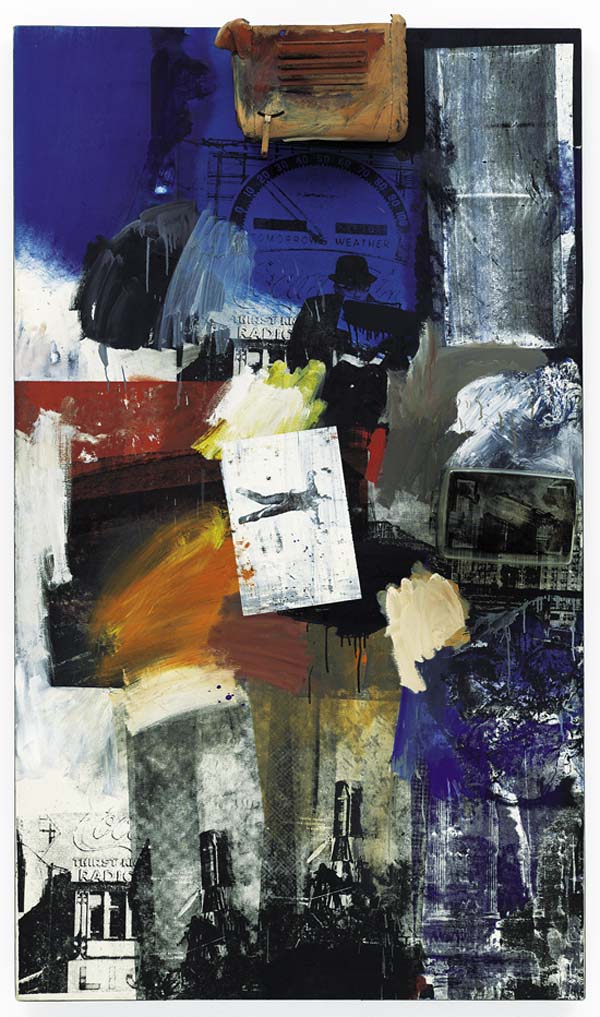
In celebration of the centennial of Robert Rauschenbergs birth, the Guggenheim New York will present Robert Rauschenberg: Life Cant Be Stopped, a Collection in Focus exhibition drawn from the museums permanent holdings with key loans from the Robert Rauschenberg Foundation. Featuring over a dozen seminal works, the presentation explores the artists groundbreaking use of materials and media and builds upon his decades-long relationship with the Guggenheim. Timed to what would have been his 100th birthday, the exhibition contributes to a global slate of 2025-26 initiatives that reexamine Rauschenbergs legacy, honoring his expansive creativity, spirit of curiosity, and commitment to change. Robert Rauschenbergs restless innovation and enduring exploration of materials and techniques have long resonated with the Guggenheims own commitment to redefining artistic boundaries. Life Cant Be Stopped not only commemorates his centennial but also deepens our ongoing dialogue with the work of an artist whose influence on contemporary art remains immeasurable, said Joan Young, senior director, curatorial affairs. Robert Rauschenbergs centennial is not only a moment to honor his legacy, but also a call to renew our commitment to the radical curiosity and spirit of collaboration that defined his life and work, said Courtney J. Martin, executive director of the Robert Rauschenberg Foundation. The Guggenheim has been a vital partner in sustaining that legacy. By reexamining seminal works from their collection and ours, this exhibition underscores the enduring power of Rauschenbergs belief that art should remain in constant motion, bridging disciplines, communities, and ideas. A central theme of the exhibition is Rauschenbergs experimental incorporation of photographic imagery into drawing, painting, and printmaking. At the heart of the presentation is Barge (1962-63), a 32-foot-long silkscreen painting co-owned by the Guggenheim New York and the Guggenheim Bilbao. Jointly acquired during Rauschenbergs 1997-98 Guggenheim retrospective, Barge was among the first 100 artworks to enter Bilbaos collection upon its opening in 1997. Executed predominantly in a 24-hour period, Barge remains the largest work in his silkscreen paintings series, which includes approximately 80 paintings produced between 1962 and 1964. This monumental piece makes its highly anticipated return to New York for the first time in nearly 25 years. Additional highlights include a dynamic untitled silkscreen painting from 1963, created after Rauschenberg began introducing brilliant color into the series. At its center is an image of his longtime friend and collaborator, choreographer Merce Cunningham. The artists use of media imagery and commercial printing techniques led many critics to associate him with pop artists such as Andy Warhol. Equally engaged with contemporary culture, Rauschenberg noted to an interviewer, I want paintings to be reflections of life, and life cant be stopped. Among the earliest works on view will be Untitled (Red Painting), ca. 1953, a formative example of Rauschenbergs experimentation with materiality, in which brightly toned red paint is layered over a collaged newspaper ground. Works on paper from 1952 to 1980 further demonstrate Rauschenbergs inventive methods, including image transfers made by applying a solvent such as lighter fluid and rubbing the back of magazine and newspaper clippings with a burnishing tool (often an empty ballpoint pen). Important loans from the Rauschenberg Foundation illustrate how these transfer methods evolved in the 1980s and 90s, as he incorporated unconventional supports like galvanized metal and inkjet printing. The Guggenheim has long supported Rauschenbergs work, including him in a 1961 group show, followed by Six Painters and the Object (1963), the first museum exhibition of pop art in New York. In 1997, the museum presented the most comprehensive retrospective of his career to date, a landmark exhibition spanning its building on Fifth Avenue, the former Guggenheim SoHo, and a satellite gallery on Hudson Street. The show traveled to multiple venues, including the Menil Collection, Contemporary Arts Museum, and Museum of Fine Arts, all in Houston (1998), before continuing to Museum Ludwig, Cologne (1998), and Guggenheim Museum Bilbao (1998-99). In 2009, the Foundation organized the memorial exhibition Robert Rauschenberg: Gluts for the Peggy Guggenheim Collection, Venice. It later traveled to Museum Tinguely, Basel (2009-10); Guggenheim Museum Bilbao (2010); and Villa e Collezione Panza, Varese, Italy (2010-11). As a hub for experimentation, the Guggenheim continues to inspire and uplift artists whose work extends beyond traditional confines. By challenging the artistic status quo of his time, Rauschenberg embodied the very spirit of innovation that Hilla Rebay, founding director of the Guggenheim Museum and Foundation, sought to promote through her commitment to abstract and non-objective art. Robert Rauschenberg: Life Cant Be Stopped highlights key works from the Guggenheims collection and marks the fifth installment in the museums ongoing Collection in Focus series, which aims to make its world-renowned holdings more accessible to the public. Robert Rauschenberg: Life Cant Be Stopped is organized by Joan Young, senior director, curatorial affairs. To learn more about the Guggenheim New York and the Guggenheims activities around the world, visit www.guggenheim.org.
Share & Print






SHARE
PRINT