Independence Seaport Museum Acquires Important China Trade Objects
October 16, 2026
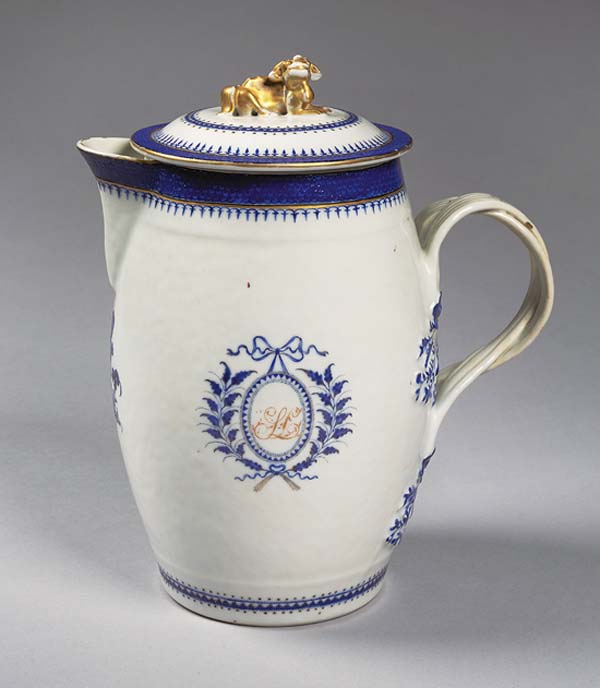
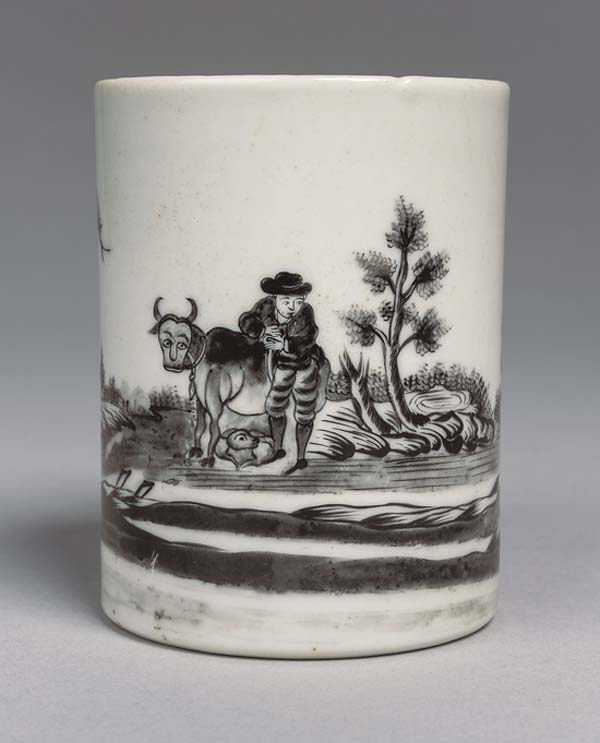
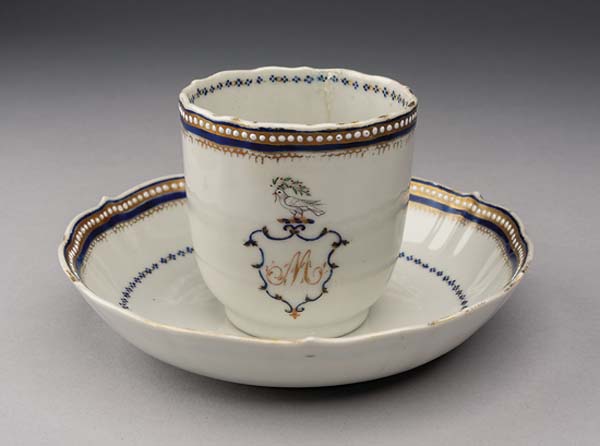
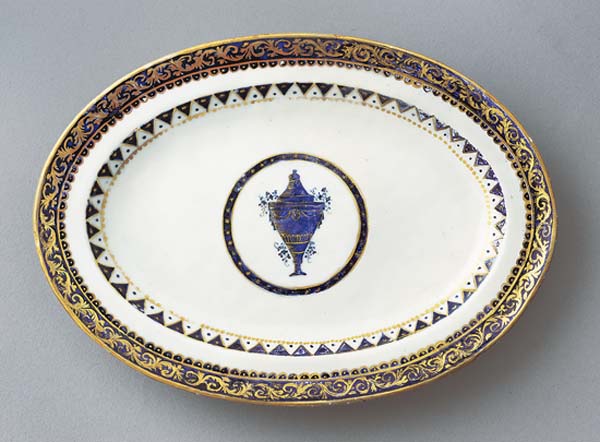
Several important examples of China Trade porcelain, each with ties to notable Philadelphians, have been recently acquired by Independence Seaport Museum (ISM). They went on view Oct. 2 in the museums largest exhibition in decades, Seeking Profit and Power: Philadelphia, China Trade, and the Making of America, which opened in March 2026 in honor of the Semiquincentennial. The exhibition will remain on view through Jan. 3, 2028. We are very excited to have acquired these items for our permanent collection, said Peter S. Seibert, president and CEO of ISM. The success of our exhibition, Seeking Profit and Power, has resulted in a new interest in creating a permanent exhibition at the museum on the stories of Philadelphia and the China Trade. The ceramics that we acquired help to tell the stories of the 18th- and 19th-century merchants who created Americas first global trading network. The first of the recent acquisitions, a cup and saucer that bears a central cartouche of a shield with the letter M (ca. 1785), have an especially interesting history. They are part of a service ordered by Thomas Mifflin (1744-1822) and Sarah Morris (d. 1790, m. 1767) that arrived on the ship Canton, which was the Philadelphian ship to successfully make the trip to and from China, according to numerous accounts. Mifflin, who was a merchant from Philadelphia, is regarded as one of the nations founding fathers, signed the United States Constitution, was the first governor of Pennsylvania, and succeeded Benjamin Franklin as the states last president. A notable connection between Mifflin and ISMs current exhibition is that he was the signer of Captain John Greens letter, delivered on the Empress of China, introducing the newly formed United States to the Chinese. A porcelain platter bearing a central medallion with an urn that dates between the late 18th or early 19th centuries is another object joining ISMs collection of China Trade porcelain. Manufactured in Jingdezhen and decorated in Canton (ca. 1785), it is part of the service that belonged to Commodore Richard Dale (1756-1826). Dale was an American naval officer who fought in the Continental Navy under Commodore John Barry. He became one of the six original commodores of the permanent United States Navy; he commanded a blockade of Tripoli in 1801 during the First Barbary War of Thomas Jeffersons presidency. The platter depicts a vase festooned with flowers and is decorated with a gilt and blue scrolling border and interior triangle-patterned geometric band. It joins other pieces from Dales service already in ISMs collection. Although it has a complicated history and genealogy, a recently acquired Chinese export porcelain cider jug with a central medallion bearing a central laurel wreath inscribed with the gilt monogram SL was likely part of a service made for the Lewis family of Philadelphia in the early 19th century. It is thought to have been commissioned by Robert Wain (1765-1836), a China trade merchant, and Phebe Lewis (1768-1845) as a gift for one of his wifes relations. Robert was a grandson of Nicholas Wain (1650-1721/22), who came to Pennsylvania in 1682 with William Penn on the Welcome. Robert Wain had a part or full interest in at least 12 ships trading with Canton. Along with his cousin, Jesse, he was one of the ships largest investors and ordered china, lacquerware, and four large landscape paintings. There are two sets of Wain family-owned china with identical decoration; it is generally believed that this third identical set (albeit with the letters SL rather than W) was commissioned by Wain for someone in his wifes family. This cider jug will accompany drawings from the Lewis family home loaned by the Historical Society of Pennsylvania depicting China trade pieces in their Victorian home that are currently on view. A rare porcelain coffee mug (after 1811), part of a large service commissioned by Israel Wistar Morris (1778-1870) and Mary (Hollingsworth) Morris (1776-1820, m. 1799), is an important example of Chinese Export porcelain made for the American market. In this case, it is decorated with a design that has long been believed to be drawn by Mrs. Morris, depicting en grisaille, an outdoor scene of a farmer with a cow. (A drawing of this subject, survived in the family, is now at Dumbarton House, headquarters of The Colonial Dames of America.) According to the couples descendants, who wrote of the service in 1931, the motif was named Quaker cow pattern because the family was practicing Quakers. The Morris and Hollingsworth families, both of which were from Philadelphia, were extensively involved in the China trade: Israel was a broker and commission merchant, and Marys brother, Henry Hollingsworth, sailed vessels to China as well as brokered goods. The last of the recent acquisitions of China Trade porcelain is a handled cup and saucer with a rose vine border and stylized central thistle design, made in the first half of the 19th century. This object is believed to have belonged to Benjamin Etting (1798-1875) and his wife, Frances Gratz (1771-1852), or someone in their immediate family. Etting was a 19th-century China trade merchant based in Philadelphia who exported goods such as furs, metals, grains, and ginseng from Appalachia; in turn, he imported porcelains, tea, spices, textiles, and furniture. At 24, Etting set sail for Canton, and he remained there for three years, until 1825. This cup and saucer join other Ettinger pieces in ISMs collection, including a portrait miniature of Benjamin, documents, and a tea box, some of which are on view. Seeking Profit and Power is generously supported by the Philadelphia Funder Collaborative for the Semiquincentennial, the Richard C. von Hess Foundation, the E. Rhodes and Leona B. Carpenter Foundation, the State Society of the Cincinnati of Pennsylvania, and WSFS Cares Foundation. For those who have not yet visited Seeking Profit and Power: Philadelphia, China Trade, and the Making of America, these recent acquisitions offer more fine examples of Chinese export porcelain made for the American market. For those who have already seen the exhibition, please consider visiting again as these additions are well worth the trip. The Independence Seaport Museum (ISM), founded in 1960 as the Philadelphia Maritime Museum, encourages visitors to discover the history of the Philadelphia region through the lens of the Delaware River. Steward of the Olympia, a 19th-century cruiser, and the Becuna, a World War II-era submarine, ISM is home to interactive and award-winning exhibitions, one of the largest collections of historic maritime artifacts in the world and a boatbuilding workshop. Accredited by the American Association of Museums since the 1970s, it is a premier, seasonal destination adjacent to Spruce Street Harbor Park on Penns Landing. Visit www.phillyseaport.org/admissons-hours-of-operation/ to learn about current hours of operation, ticket packages, and guided tour options. See the full schedule of programs and events at www.phillyseaport.org.
Share & Print






SHARE
PRINT