Lorenzo Lorraine Langstroth: The Father Of American Beekeeping
By Justin W. Thomas - November 14, 2025
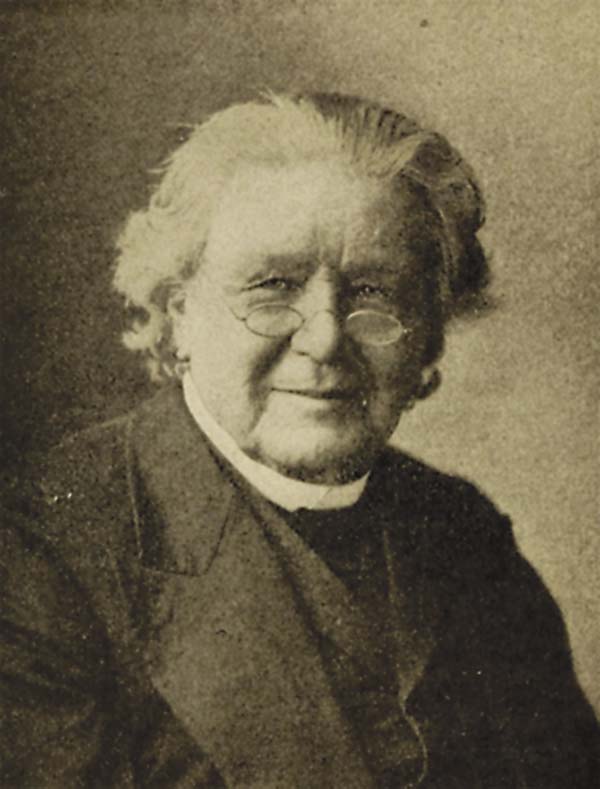
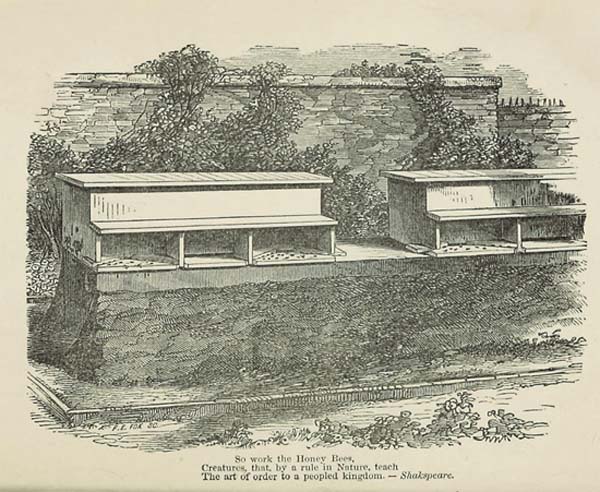
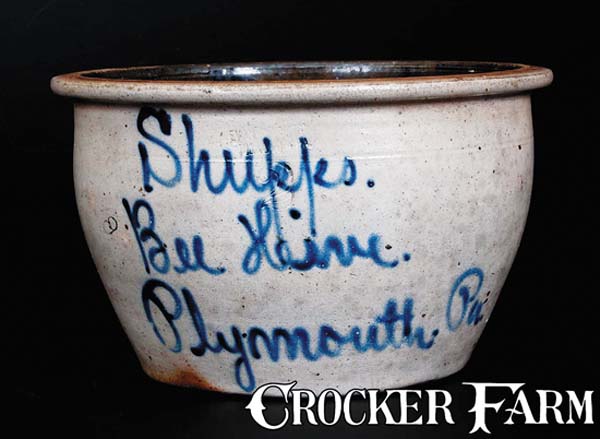
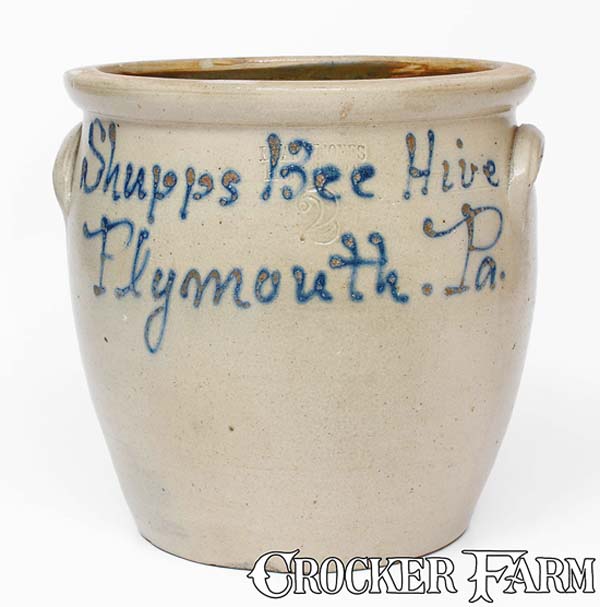
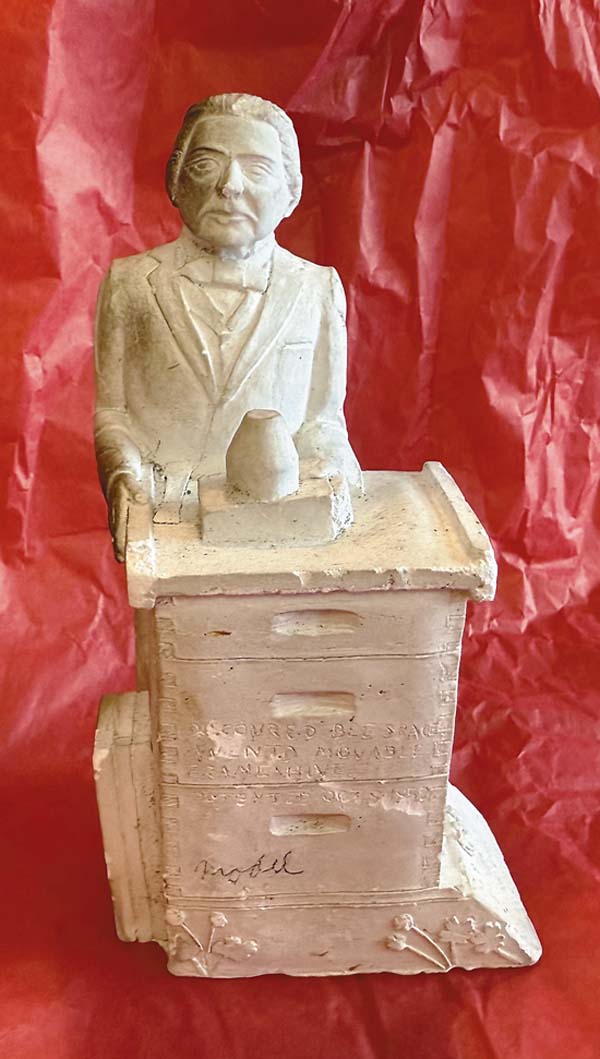
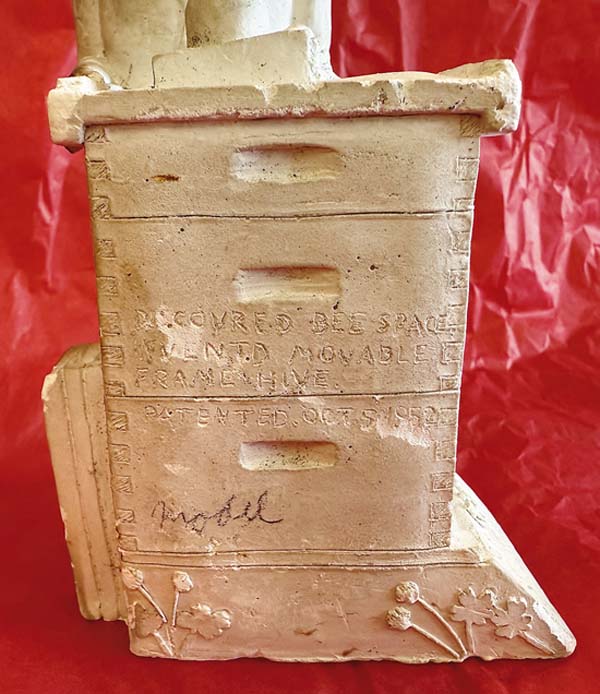
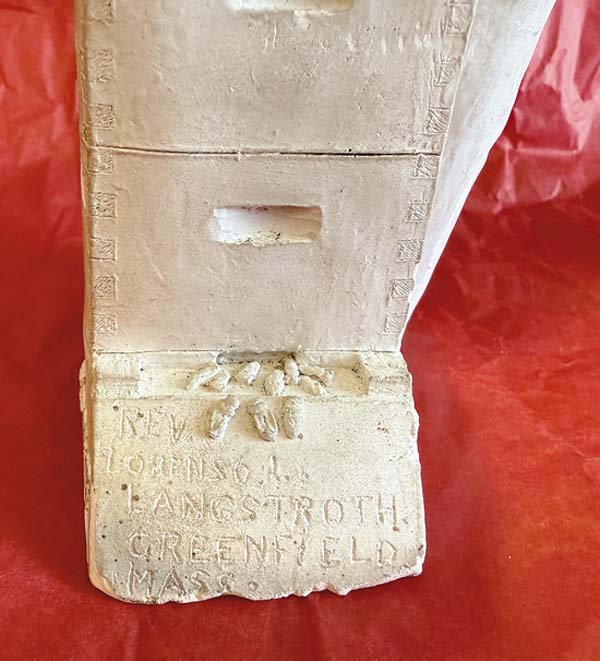
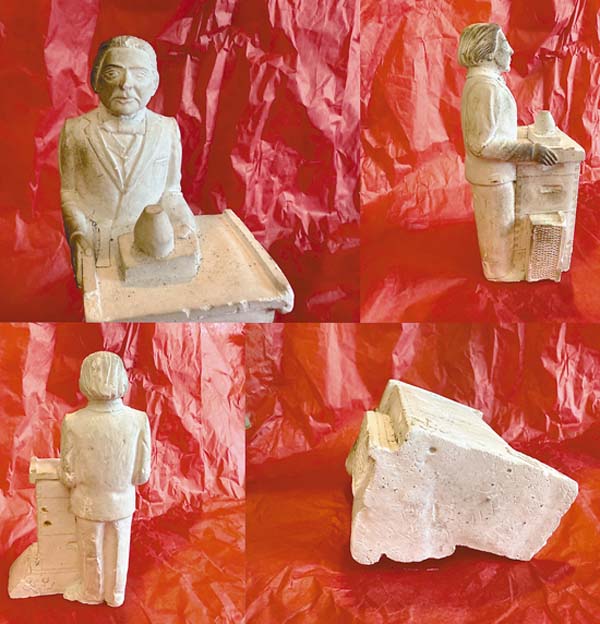
An excellent example of 19th-century stoneware from Philadelphia sold as part of Crocker Farms Summer 2025 sale in Sparks, Md.; the ca. 1830 three-gallon cobalt decorated stoneware pitcher was inscribed below the rim, Industry must Prosper most glorious news for the beehive. That pitcher was attributed to Enoch Bennett in Philadelphia, although Bennett was previously employed at the Baltimore stoneware company of Parr & Burland. According to Crocker Farm, The inscribed slogan references a popular play called The Bee-Hive, which was published in New York City in 1811, and routinely performed for decades up and down the East Coast. A comedy or farce that took place in a country inn on the coast, it was frequently advertised as, The Bee Hive. Or, Industry Must Prosper, and featured the following line on the first page of Act I: Well, Joe, this will be a glorious day for the Bee-hive! While this play ran at least a few times over the years in Philadelphia, one 1829 stint, just two years after Burnetts 1827 arrival in Philadelphia, may have been the inspiration for this pitcher. However, the beehive was also a common symbol for savings banks in the 19th and early 20th centuries, representing industry, thrift, community and prosperity. For example, the Bank for Savings in the City of New York (1819-1982) notably used a golden beehive as its logo. The bank was founded in 1816 and first advertised itself as a bank for the poor. However, the beehive savings bank also dates back thousands of years to terracotta wares made by Roman potters. A beehive was also the shape of some kilns, a style often used in the 1800s to produce charcoal, a fuel source for smelting and other industrial processes. Nevertheless, beekeeping in America was still developing around 1830, where the common practices and equipment used in the profession eventually changed with the innovations that came in the mid-19th century, leading to a growing profession by the 1870s to 1880s. But, it was a Philadelphia-born reverend who altered the beekeeping industry forever with an invention that was patented in 1852. The Life of Reverend Lorenzo Lorraine Langstroth Reverend Lorenzo Lorraine Langstroth (1810-1895) was born on Christmas Day in Philadelphia in 1810. He graduated with a degree in theology from Yale College in 1831, and afterwards served as a pastor at a number of Congregational churches in Massachusetts, including ones in Andover and Greenfield. He was also a principal at a school for young women in Greenfield, Mass. But it was in 1838, while he was the pastor at the South Church in Andover, that an event changed the trajectory of his life forever. Langstroth visited a friend who kept bees, sparking a curiosity over beekeeping. He remained a pastor and a school leader, but the notion of beekeeping never left his mind. Perhaps he even contemplated through the years different ideas of how he could improve beekeeping. Although no one really knows the conversations that were had that day, the visit clearly impacted Langstroths legacy. It was in 1851, after Langstroth had moved back to West Philadelphia, where he established a 2-acre apiary (or a place where bees are kept), that he revolutionized beekeeping with his discovery of bee space, as well as the movable-frame beehive. Langstroth designed a hive with frames suspended from the top, leaving the correct bee space. This design allowed beekeepers to easily lift out individual frames for inspection and honey removal, with the design later known as the Langstroth hive. Interpretations of this hive are still widely used today. Langstroth patented this design in 1852 and moved back to Greenfield in 1853, where he published the book, Langstroth On The Hive And The Honey-Bee, A Bee-Keepers Manual. The book included an Advertisement. L.L. Langstroths Movable Comb Hive. Patented October 5, 1852. The ad read in part, Each comb in this hive is attached to a separate, movable frame, and in less than five minutes they can all be taken out, without cutting or injuring them, or at all without enraging the beesNew colonies may be formed in less time than is usually required to hive a natural swarm; or the hive may be used as a non-swarmer, or managed on the common swarming plan. The surplus honey may be taken from the interior of the hive on the frames or in upper boxes or glasses, in the most convenient, beautiful and saleable formsThe hive and right will be furnished on the following terms. For an individual or farm right, five dollars. This will entitle the purchaser to use and construct for his own use on his own premises, as many hives as he chooses Reverend Langstroth then moved to Oxford, Ohio, in 1858, which is located about 40 miles northwest of Cincinnati. He purchased a 10-acre farm and devoted his time to beekeeping and cultivating fruit trees and vegetables. The Ohio and Western New York area was a popular destination for farmers during this period, including the West Bloomfield, N.Y., potter, Alvin Wilcox (1801-1862), who contributed over 30 letters in the 1850s about growing grapes to Moores Rural New-Yorker. Furthermore, Langstroths book was also republished, including translations done in Italian and French in the 1880s, which is a decade regarded today as the golden age of beekeeping in America. This was a time that saw advancements in beekeeping, where it even became a commercial endeavor. Langstroth eventually died in Dayton, Ohio, in 1895, and the house he lived in at Oxford was listed on the National Register of Historic Places in 1976. Interestingly, a great piece of folk art was recently discovered in the Greenfield area by Massachusetts antiques dealer John Prunier. The hand-carved object is made from chalk and probably dates from about the mid-19th century. The figure is Reverend Langstroth standing behind a stacked version of his movable-frame beehive. Placed on top of the invention is a small beehive, similar to the cobalt decorated one that adorns the mentioned ca. 1830 three-gallon stoneware pitcher, which is attributed to Enoch Bennett in Philadelphia. Inscribed across the front of the chalk beehive is Discovered Bee Space / Invented Movable Frame Hive / Patented October 5, 1852. The word Model is also written in pencil. It is also inscribed on the side, Rev. Lorenzo Langstroth / Greenfield, Mass. Chalkware, which was primarily made from plaster of Paris or sculpted gypsum was popular in America from the late 18th to the early 20th century. It was typically a decorative technique that encompassed various molded figures and was popular with manufacturers in Pennsylvania, New York and Massachusetts, etc. Although the figure of Reverend Langstroth is certainly unique, and perhaps a one-of-a-kind object, representing both American folk art and the invention of an important figure, whose contributions helped the beekeeping and fruit farming industries evolve in the 19th century. Sources Langsworth, Lorenzo Lorraine. Langstroth On The Hive And The Honey-Bee, A Bee-Keepers Manual. Northampton, Mass.: Hopkins, Bridgman & Company, 1853. Thomas, Justin W. Americas Great Awakening and Migration The Red Earthenware of Western New York, Volume 1. Beverly, Mass.: Historic Beverly, 2025.



Share & Print






SHARE
PRINT