
Red Earthenware And Stoneware Sugar Bowls A Brief Examination Of The Form Manufactured In 18th- And 19th-Century America
By Justin W. Thomas - April 03, 2026
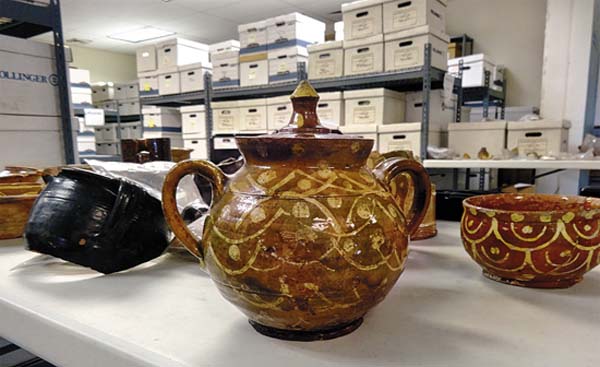
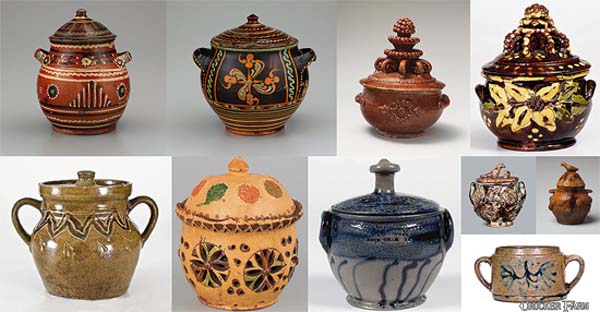
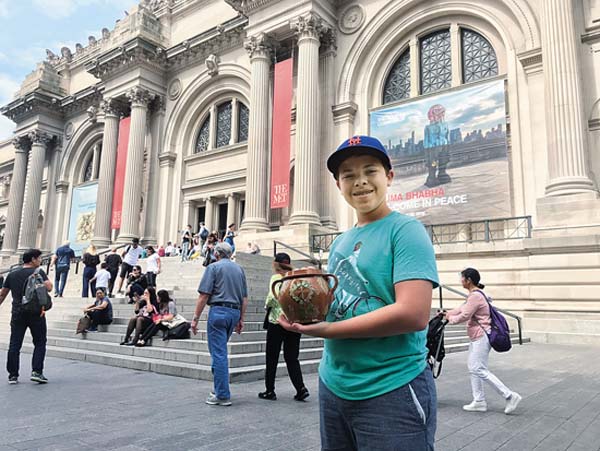
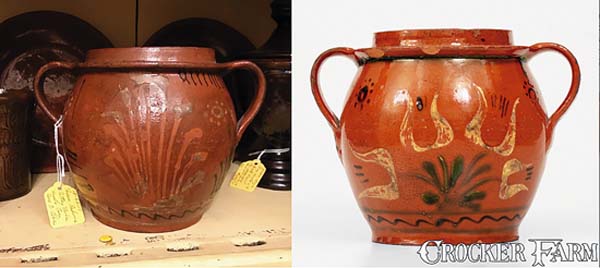
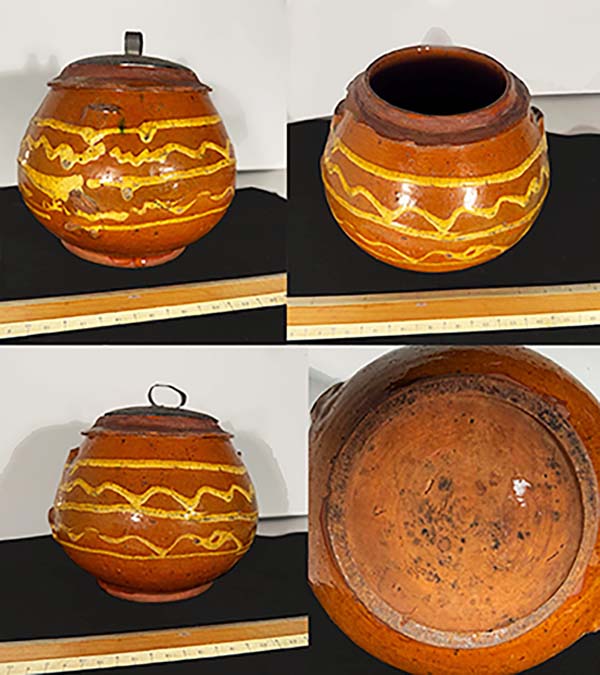
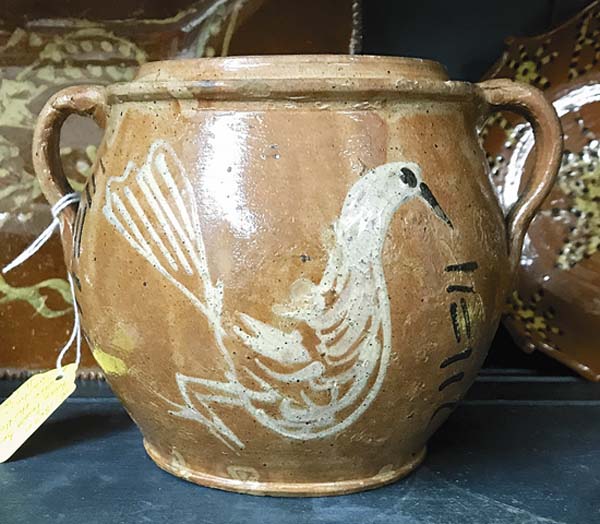
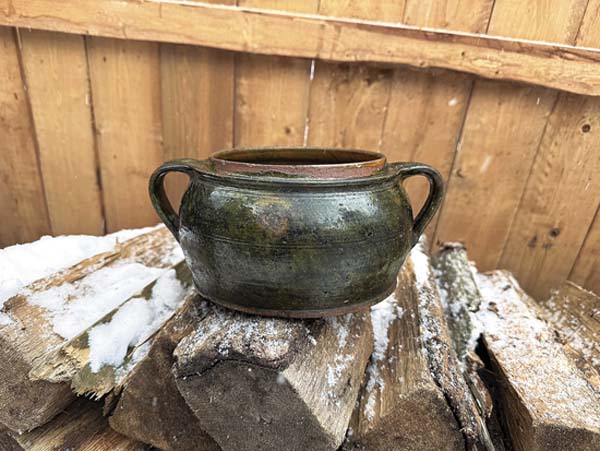
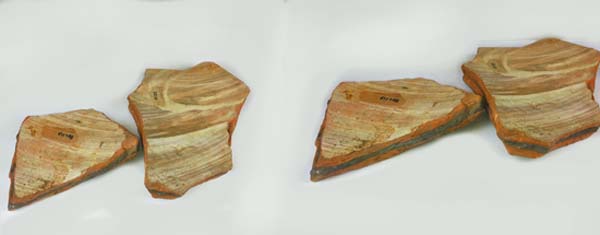
Earthenware and stoneware sugar bowls evolved from being a luxury good and prized object to becoming widespread in Europe and America in the 17th century. This was a result of the growing sugar, coffee and tea trade, while also reflecting social status and changing tastes. Sugar was an expensive commodity, so early sugar containers were typically symbols of wealth. However, as sugar became more accessible, especially in America, the sugar bowl form became a staple of American dining tables. Some of the imported ceramic sugar bowls came from such manufacturers as Josiah Wedgewood (1730-1795) and other Staffordshire, England, potters, as well as wares imported from Chinese porcelain factories. Sugar, molasses and coffee were major components of the West Indies Trade in Salem, Mass., where some people even referred to sugar as white gold. This trade formed a crucial part of the triangular trade network with Salem ships supplying West Indian plantations with fish and lumber and returning with these valuable, slave-produced goods, fueling New Englands economy. This trade was also vital to Salems prosperity before the American Revolution, though its focus later shifted to Asian spices after 1783, as part of the China Trade. The sugar trade was also affected by the Sugar Act of 1764, which was enacted by British Parliament to pay off war debts, strictly enforcing taxes on molasses and sugar imported into the American Colonies. Large sugar bowls often signified wealth in Colonial America, where the most significant surviving domestically produced example is possibly a ca. 1717-1754 slip-decorated red earthenware bowl with two handles and a lid likely made at the Isaac (1692-1742) and Grace Parker (1697-1754) Pottery in Charlestown, Mass. This object does not appear to be a part of the regular production at the Parker Pottery, based on site work done by archaeologists in the 1980s, as part of Bostons Big Dig Project, now kept at the City of Boston Archaeology Department in West Roxbury, Mass. This bowl was possibly made for a specific person or building, although it did not travel far, as it was discovered about 16 miles to the northwest in an old house in Winchester, Mass., in 1976. After the American Revolution, the West Indies trade was restricted by Britain, which affected the American economy and largely collapsed some of the triangular trade in America. But the Caribbean sugar trade continued, and cities like Philadelphia and New York City (i.e. Isaac Roosevelt (1726-1794), 1786), also established large sugar refineries, where they were able to process raw sugar. In the early 19th century, French planters and enslaved workers established massive cane cultivation and sugar production operations on plantations in Louisiana. The sugar plantation system expanded to other parts of the American South. Additionally, the cultivation of sugar beets around Philadelphia began in 1836, followed by new source opportunities in Hawaii in the mid-19th century. This led to the mechanization and refining growth that took place in the United States as part of the Industrial Revolution in the later part of the 1800s. This is the period that sugar bowls were produced in more widespread regions, such as locations in Maryland and Virginia, etc. The introduction of industrial sugar production also paved the way for mass-produced sugar-based products in the 20th century. Some of the most prolific post-American Revolution and 19th-century red earthenware sugar bowls made in America were manufactured near locations where sugar was grown and manufactured. These include slip-decorated stoneware sugar bowls made by enslaved Black potters in Edgefield, S.C., before the American Civil War, as well as slip-decorated red earthenware examples made in Alamance County, N.C., in the late 18th and early 19th century. There may have also been some sugar bowls produced in Baltimore as that city also sustained a significant trade and refining industry. Some of the massive stoneware jars made by Black potters in Edgefield may have also incorporated the use of sugar since it was an ingredient used in the process of meat storage, which some of the jars were used for. According to historical recipes that mention the use of stone-jars, For dry curing, meat would be layered with mixtures of salt and saltpeter, sometimes with the addition of sugar, molasses, and spices, prior to smoking. Interestingly, there are a group of existing red earthenware sugar bowls made in the southeastern Pennsylvania area in the late 18th and 19th century. This is likely because Philadelphia was a major sugar refining hub, which made sugar more affordable for everyday use, while also being an area that employed many potters during this period. Nonetheless, an area that might be confusing with some of the production in southeastern Pennsylvania are some red earthenware types that were also produced in Europe in the 18th and 19th century. Some are difficult to determine the origin, whether American or foreign made, while others are easier to identify to local production. The confusion stems from similar slip techniques and forms, including the shape of the bowl, the handles and lids. However, this is a form of red earthenware that is less common with New England potters after 1775, especially those who operated near coastal trade ports such as Salem, Boston, Plymouth and New Bedford, Mass. Sugar was generally more expensive in New England than in Philadelphia during the first half of the 1800s, primarily because Philadelphia benefited from its closer proximity to the Caribbean sugar islands (like St. Croix, Jamaica and Cuba) and its own refining industry, making it a major import hub. New England relied more on northern-grown beet sugar or higher-cost imported molasses and refined sugar, although prices fluctuated with trade. Sugar was likely still somewhat of a luxury during this period in New England, when compared to Philadelphia. The lack of red earthenware forms probably meant sugar in New England was kept in a sugar chest or box, as well as more refined imported ceramics and porcelain, some of which migrated to America as part of the China Trade in places like Salem and Boston. Overall, though, the history of sugar and subsequent sugar storage bowls or jars is central to American history because it reflects an important element of commerce for the economic foundation of America before and after the Revolutionary War. In the years that followed the Civil War and the end of slavery, sugar evolved into an everyday domestic household staple, eventually transforming into the way it is used and sold today. Nevertheless, these existing American sugar bowls (some are also made from glass, while others are molded ceramics made at factories) are much more than a piece of utilitarian pottery from the 1700s and/or 1800s; rather, they speak to what sugar represented in a historical context, dating back hundreds of years. Sources: Rizzo, Adriana. Examining Storage Jars from the American South: Scientific research on food residue found in nineteenth-century stoneware vessels produced by enslaved artisans sheds light on the contents once stored inside. New York City: Metropolitan Museum of Art, January 10, 2023. Thomas, Justin W. A Charlestown Sugar Bowl: The rediscovery of a redware masterpiece. New England Antiques Journal, February 2016. _____. The Dawn of Independence, the Death of an Industry: The Pottery of Charlestown, Massachusetts. Beverly, Mass.: Historic Beverly, 2020.

Share & Print






SHARE
PRINT