Rembrandts Lions: Art And Exile In The Dutch Republic
October 09, 2026
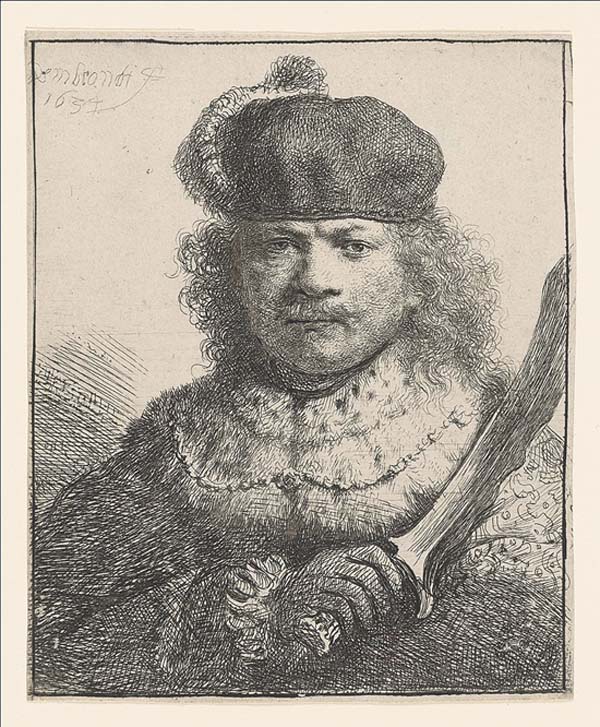
The Morgan Library & Museum will present Rembrandts Lions: Art and Exile in the Dutch Republic, an exhibition that brings together, for the first time, a remarkable group of drawings, etchings, and paintings highlighting the often overlooked but formative presence of migrants, immigrants, exiles, and refugees in the world and work of Rembrandt Harmenszoon van Rijn (1606-69). The exhibition particularly focuses on stories of diaspora, or dispersed communities, that figure prominently in many of his etchings, offering a new perspective on the effects of migration on 17th-century life. Today, Rembrandt is seen as the quintessential Dutch artist, yet in his day the Dutch Republic was newly formed, and what it meant to be Dutch was still being defined. On view from Friday, Oct. 23, through Jan. 31, 2027, this exhibition illuminates a new interpretation of the artist and the world he inhabited. Rembrandts Lions: Art and Exile in the Dutch Republic offers fresh perspectives on a well-known and thoroughly studied artist through a modern interpretive lens, said Colin B. Bailey, Katharine J. Rayner director of the Morgan Library & Museum. At the heart of the exhibition is the Morgans celebrated collection of Rembrandt etchings, the largest and finest in North America, formed primarily by J. P. Morgan during his lifetime but added to over the last century. Major works take on new significance in this exhibition, which sheds light on the cultural context in which the artists innovations and stylistic choices were made. In the 17th century, up to 60 percent of residents in Amsterdam, where Rembrandt lived and worked, hailed from elsewhere. Amid catastrophic religious and political wars that dislocated hundreds of thousands of people, the Dutch Republic established a right to personal religious freedom and became a haven for those who, by force or by choice, left their homes. The newly settled were often referred to as strangers or exiles, their stories subsequently informing the new concepts of migrant, immigrant, and refugee. This diverse community brought ideas, talents, and cultures that influenced life in the republic and Rembrandts art. The experimental medium of etching aptly inspired some of his most innovative work, which combined historical and contemporary references, often to tell exile stories in new ways. A pivotal moment in Dutch history compelled Rembrandt to make art, and this exhibition gives visitors the opportunity to consider the parallels between Rembrandts Amsterdam, New Amsterdam, and New York City, said Sarah Mallory, Annette and Oscar de la Renta assistant curator of drawings and prints at the Morgan. By recognizing and foregrounding the stories of migrants, immigrants, exiles, and refugees depicted in Rembrandts etchings, the exhibition brings greater attention to the histories and enduring legacies of marginalized communities that played a central role in shaping some of the artists most innovative and important works. Rembrandts Lions: Art and Exile in the Dutch Republic shows how the diverse communities of Amsterdam in the 17th century informed Rembrandts evolution into the artist we know today. The lion, a symbol of the resilience and strength shown by the republics people and lands, began to appear in Rembrandts etchings, often in the context of these communities stories, coinciding with the republics rise to power. Varied in appearance, from imaginative to lifelike, the lion recurs throughout the artists oeuvre, most often in portrayals of the exiled Saint Jerome, one of Rembrandts most frequently depicted saints. Saint Jerome sought to expand the borders of the church to include the humblest of peoples. His pursuit led him to a self-imposed exile far from home in the desert, where, according to legend, he pulled a thorn from a lions paw; the animal remained with him thereafter. In Rembrandts etchings, the pair may be understood as an expression of compassion, loyalty, and acceptance amid the difficulties of exile, a lesson that resonated with the many peoples in the Dutch Republic. The exhibition consists of six sections. The first, Pride of Lions, explores how the founding of the Dutch Republic established Amsterdam as a haven for religious and political exiles, as well as the connections to Saint Jerome in Rembrandts work. Republic of Refugees looks closely at depictions of migrant, immigrant, and exiled communities both in the Bible and in Amsterdam. The Lions Share centers on global stories of the Dutch Republic and colonial aggression. Home/Lands examines the neighborhoods where migrant communities resided in Amsterdam through the eyes of Rembrandt, who lived among them. Fitting In offers a wider exploration of Rembrandts practice as a portraitist, including how he innovated techniques to advance the etching medium. The last section, Beyond Belonging, takes viewers to the end of Rembrandts life and considers depictions of marginalized figures. Throughout the exhibition, Rembrandts works provide insight into how he viewed global communities and perceived different countries and peoples. Themes of home permeate the works, from domestic scenes of Rembrandts life to the ways migrant communities sought refuge in Amsterdam. Many of the republics exiles were searching for more than a place of safety; they hoped to establish themselves and create a sense of belonging. Questions of identity and belonging also emerge through one of the major threads of the exhibition and of Rembrandts work: portraiture, both of himself and of others across many economic and social groups. The portraits on view include a 1639 etching of Manasseh Ben Israel, a Portuguese-born rabbi who settled in Amsterdams growing Sephardic community and established the first Hebrew press in Holland. Rembrandt also accepted numerous commissions from members of Amsterdams upwardly mobile class who sought to establish their place within a Dutch society of their own making. As part of his fascination with identity and representation, Rembrandt embraced depictions of dress and appearance, as seen in Self-Portrait with Raised Sabre (1634) and Self-Portrait in a Cap, Wide-Eyed and Open-Mouthed (1630). Also on view are other highlights from the Morgans Rembrandt collection, including three impressions of The Three Crosses (ca. 1653) and The Hundred Guilder Print (ca. 1648), as well as unprecedented loans from the Rijksmuseum, Amsterdam (the drawing Recumbent Lion, 1660), and the National Gallery of Art, Washington, D.C. (the painting The Mill, ca. 1645-48). To learn more, visit www.themorgan.org.
Share & Print






SHARE
PRINT