The Dali Of The Distelfink A Brief Look At The Artwork And Life Of Johnny Ott
By Karl Pass - August 01, 2025
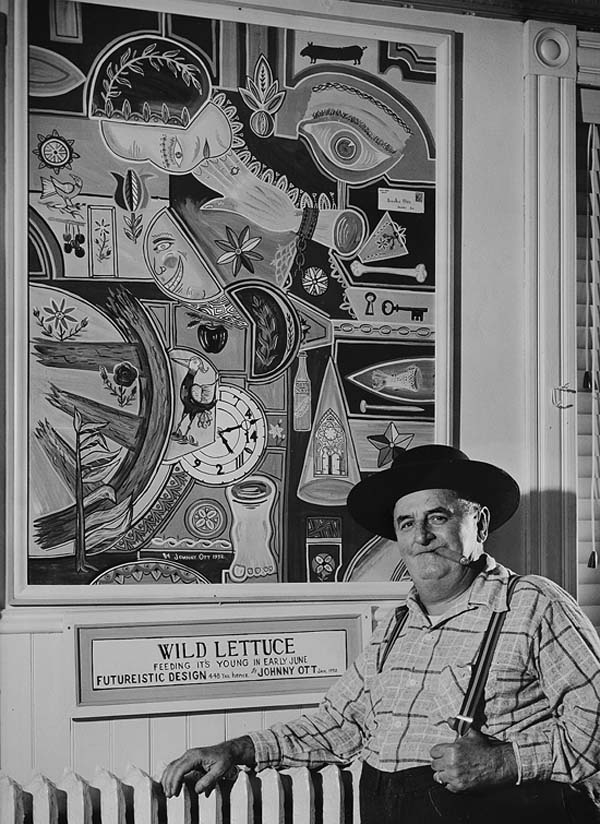
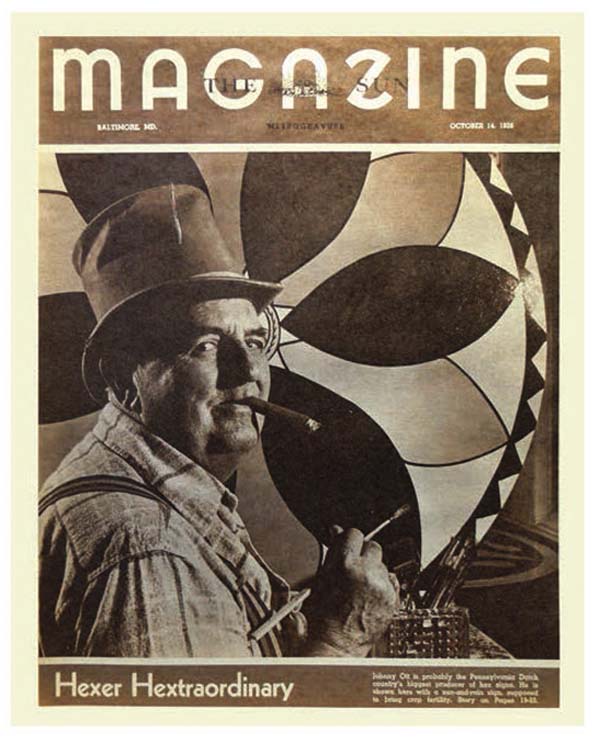
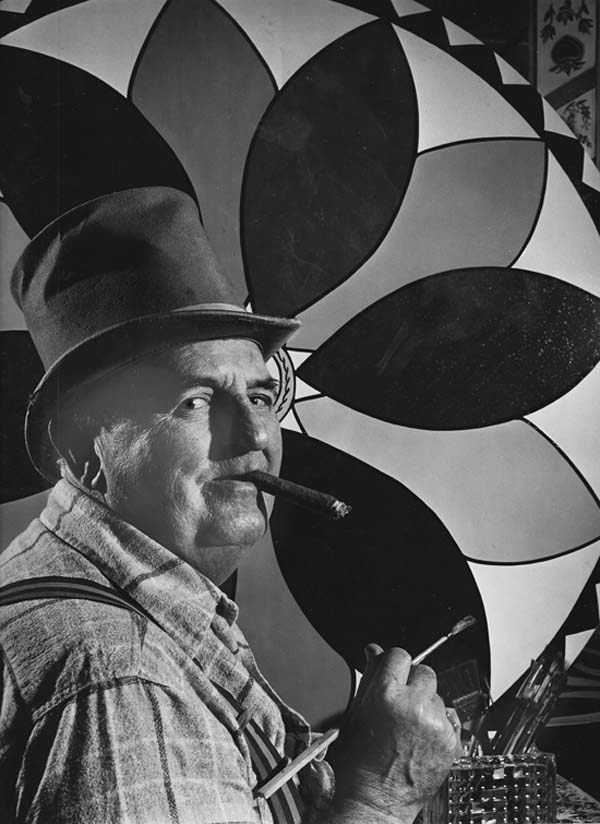
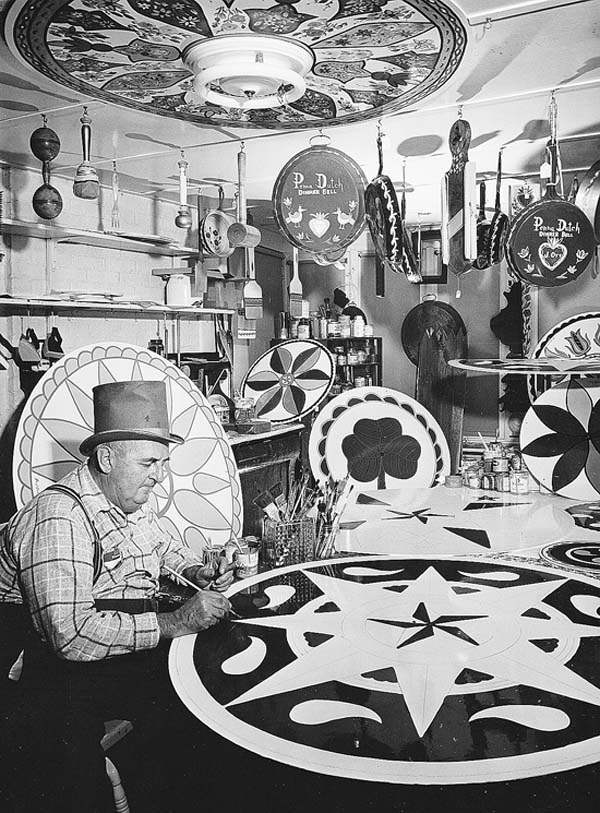
John J. (Johnny) Ott (1890-1964) was a revivalist painter, businessman, and restaurateur. He was a well-known figure during the height of the Pennsylvania Dutch tourist trade era of the mid 20th century for his Hex Sign art. Born in Reading, Pa., Ott was a hex sign artist and proprietor of the Lenhartsville Hotel (Deitsch Eck, or Dutch Corner). The sign above the door of the still open restaurant read Volkommen which translates to a perfect work of art or complete. His obituary was in the July 30, 1964, The Morning Call (Allentown, Pa.). He died at 73 and was predeceased by his wife Emma. A well-done exhibition titled Hex Signs: Sacred and Celestial Symbolism in Pennsylvania Dutch Barn Stars at the Glencairn Museum in Bryn Athyn, Pa., was mounted in 2019. If sounding familiar to regular readers, I wrote about this in Antiques & Auction News during the exhibits tenure. Curated by Patrick Donmoyer, director of the Pennsylvania German Cultural Heritage Center at Kutztown University, it explored multiple themes behind the imagery in hex signs and discussed Otts legacy. Donmoyer also wrote a book on the topic Hex Signs: Myth and Meaning in Pennsylvania Dutch Barn Stars (2013). These colorful murals/symbols such as geometric stars and sunbursts on barns in southeastern Pennsylvania represent an American artistic tradition. They speak to an agricultural identity crossed with a folk art expression unique to America and unique to Pennsylvania cultural history. As the exhibit outlined, the interpretation of these symbols, this art form, is complex. In the mid 20th century, Ott successfully both celebrated and commercialized them. He did not paint Barn Stars but was an important figure in the Pennsylvania Dutch artistic tradition as a hexologist reinterpreting these decorations on newly available composite signboard called masonite. A contemporary of Ott, Milton Hill (1887-1972) was a traditional barn star painter. Both men were at the 1953 Kutztown Folk Festival, which began three years earlier. The two had different visions for their craft. Ott, being a hexologist, was all-in, explaining the work as possessing mystical powers. As explained by Donmoyer in his exhibition catalog, He told tourists that each design not only had a succinct meaning, but also served as a charm for a wide variety of concerns and infirmities, everything from assurance of success and prosperity, to assistance with love and romance. This concocted commercial mythology ensured that Otts customers not only received a piece of his work, but also a story. Author and scholar Donmoyer later explained that while Ott consciously bolstered the Professor of Hexology persona and commercialized the mythology surrounding his work, he once gave an interview early in his career that he began the whole subject as a joke, but it evolved into commercial success. This was during a time when America was booming in both car travel and tourist trade enterprises. Think Roadside America. Otts Lenhartsville Hotel, at old Route 22 and Route 143 in Lenhartsville, Pa., has a storied history which continues today. Originally, the Washington Hotel in the late 18th century, it suffered a fire ca. 1914, and was owned by Ott from the 1930s until his death. Decorating parts of the interior, he proverbially wore several Chesterfield top hats, serving as chef and bartender and keeping a studio on a side porch. In 1971, it was purchased by the Deitsch Eck Hotel and Restaurant Inc, a subsidiary of the PA Dutch Folk Culture Society (PADFCS), a nonprofit organization. Sometime in the 1990s there were plans by the PADFCS to relocate the museum complex and artifacts to the Kutztown University Heritage Center. Steve Stetzler, a local resident; former employee of the restaurant; and graduate of Penn States Hotel, Restaurant, and Institutional Management program, was asked to manage the business. In 1997, the PADFCS sold the restaurant and buildings apartments to Stetzler. Visit www.the-eck.com for hours of operation. This artistic tradition was done by many regional artists such as Johnny Claypoole beginning in 1962. Claypoole died in 2004. His son Eric paints barn stars and hex signs today and was a long-time exhibitor at the Kutztown Folk Festival. The festival was not held in 2025, which is its 75th anniversary. The Baltimore Sun Magazine (Oct. 14, 1954 issue) did a cover feature on Ott titled Hexer Hextraordinary published 71 years ago. A few of the original photograph proofs are illustrated here. Among featured artworks was his Wild Lettuce, a surrealist painting Ott painted in 1952. One look at this work, and you will understand the title of this article. If any readers know the current whereabouts of this painting, please contact the author.

Share & Print






SHARE
PRINT