The Dry Family Pottery Of Stoney Brook And Dryville A Look At Berks County, Pa., Redware, Ca. 1806-80
By Justin W. Thomas - June 20, 2025
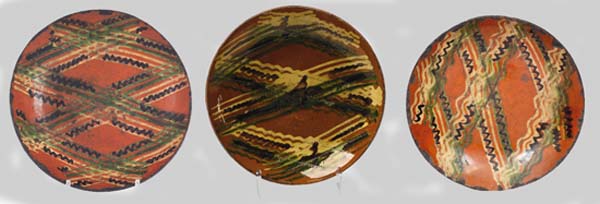
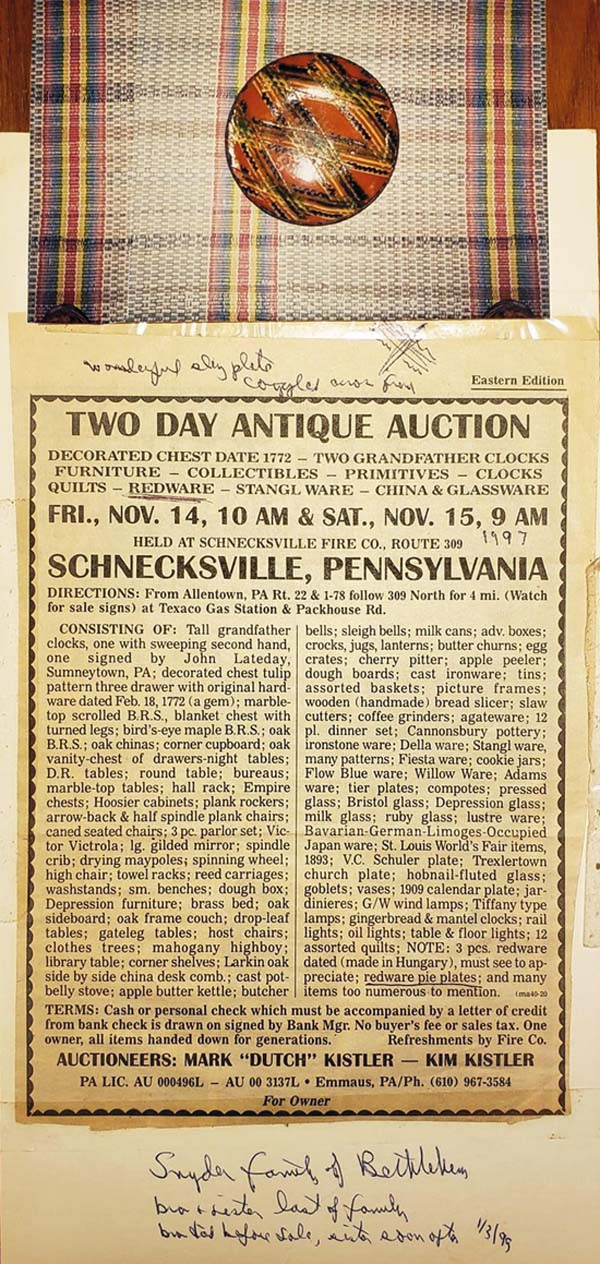
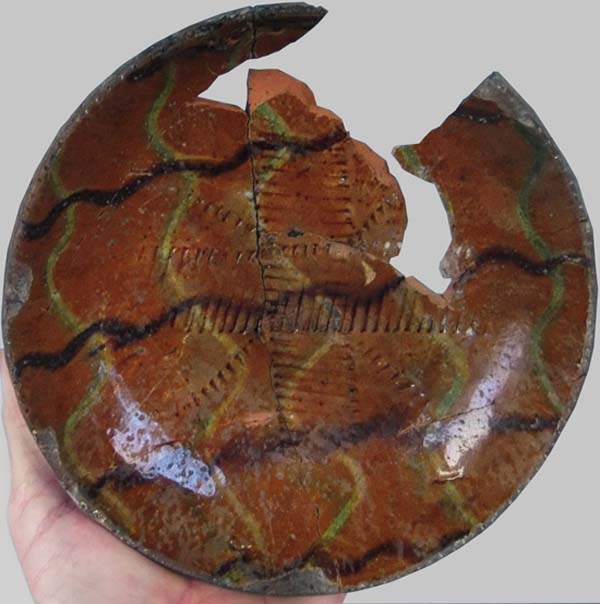
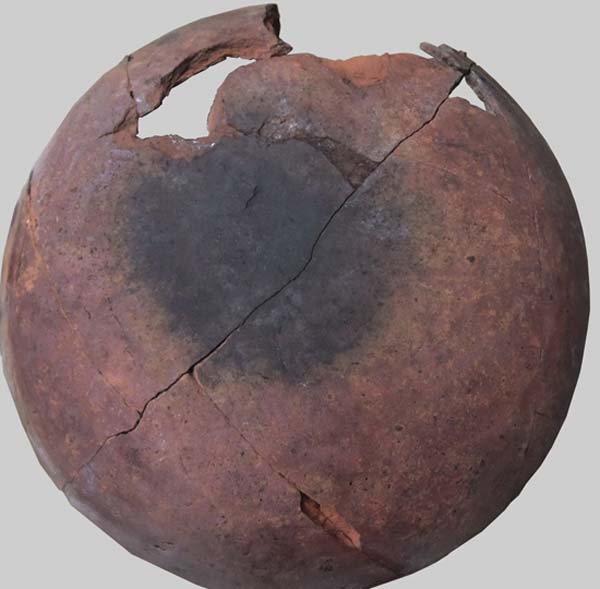
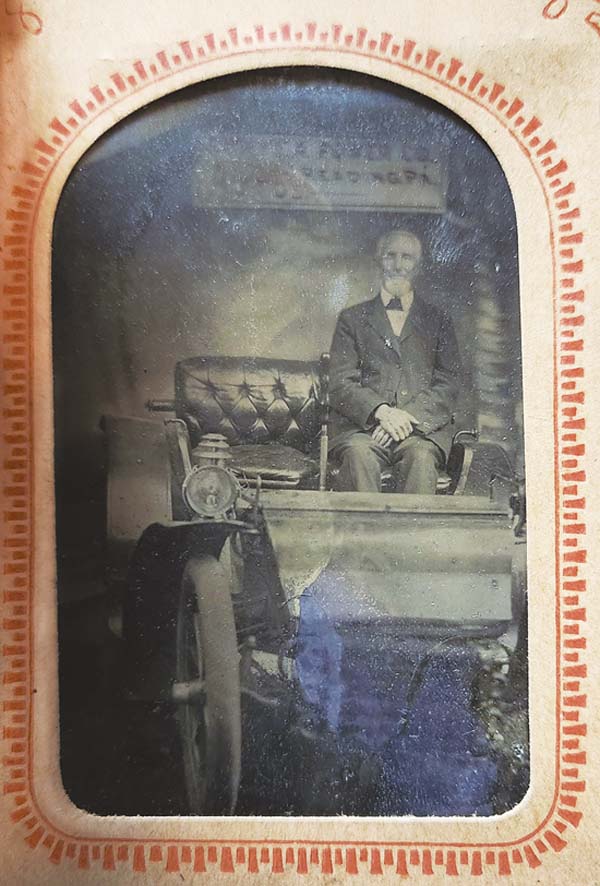
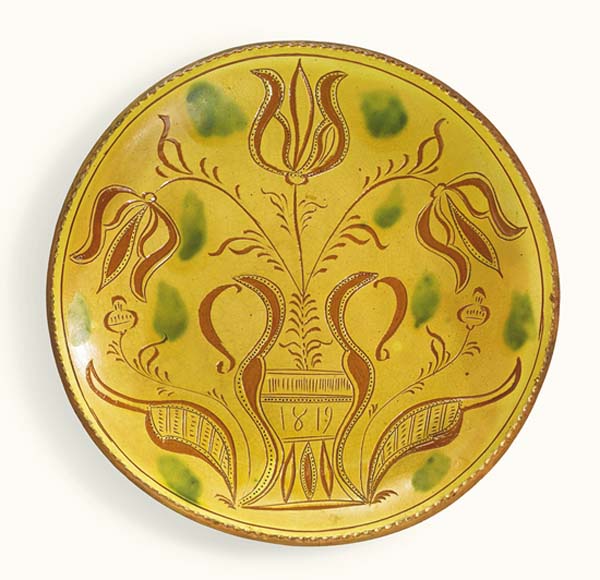
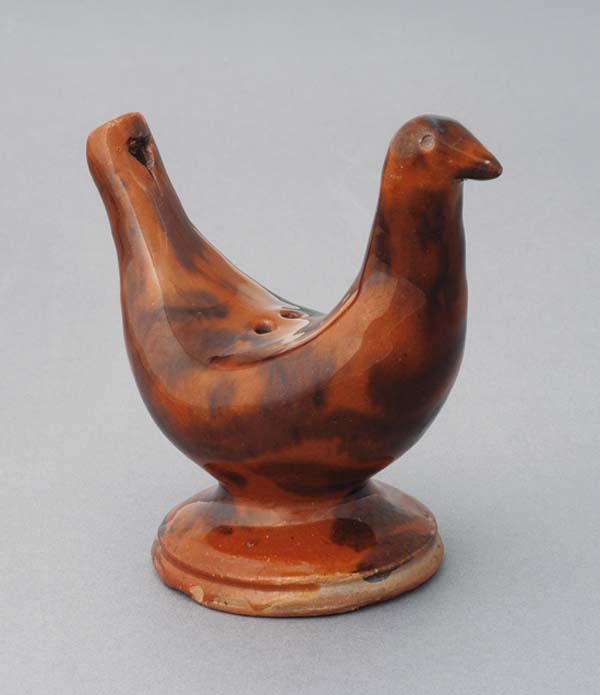
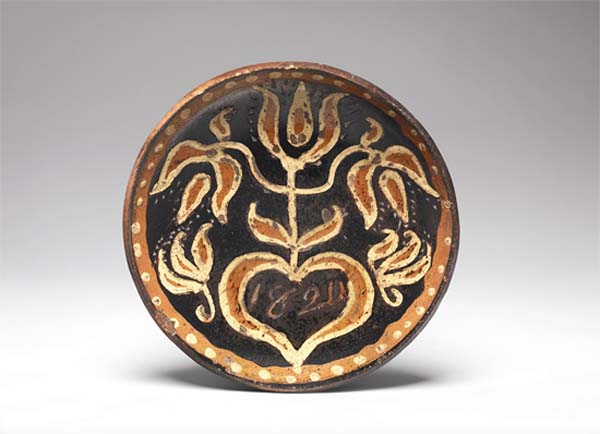
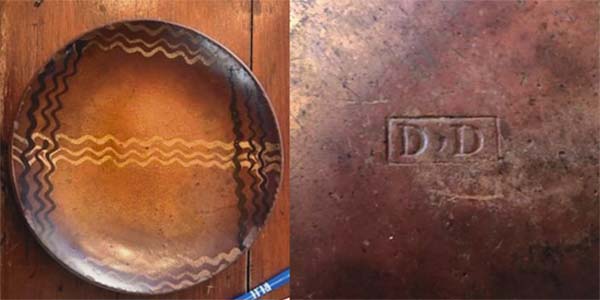
One of the more visually pleasing types of 19th-century red earthenware from the American Northeast is a style of plate adorned with three colors of crossing slip decoration that was manufactured in southeastern Pennsylvania. These plates are also adorned with a coggled wheel that resulted in a repetitive line decoration. But there are only a small group of these plates that are known to exist today. They were drape molded, and some (most) are also marked on the back with a stamped number. One of the best examples was found decades ago in Bucks County, Pa., and is currently privately owned in a prominent Pennsylvania collection, which was the subject of a feature story written by Johanna McBrien for the Spring 2013 issue of Antiques & Fine Art Magazine, titled, Kindred Spirits. Another example was previously owned by Lester Breininger (1935-2011), which he purchased at a sale in Schnecksville, Lehigh County, Pa., in 1999. His note fromthesale bill reads, Snyder family of Bethlehem bro & sister last of family bro died before sale, sister soon after 1/3/99. Ohio potter Greg Shooner noted, Lester Breinenger always thought of these as Berks County, Pa. Probably comparing the 5/6 divided slip cup with other pieces attributed to Daniel Dry of Dryville, Pa. The white, copper and manganese slips applied with this cup have similar, if not identical gaps, and were applied in tulip patterns as well as criss-cross and plaid motifs.If these are not Berks County, I would suggest that they were at the very least journeyman work and closely related. An artifact that could be related to these plates wasrecovered a few years ago by Tom Kennedy Jansen from an 1860s archaeological context in southern New Jersey. The 19th-century ownership of this plate is unknown, but it appears to be related, decorated with a similar crossing three-color slip decoration, as well as impressed with repetitive lines from a coggle wheel. But the back of this plate is not marked with a number. Pottery production began in Stony Point, Berks County, Pa., in the 18th century with the Melcher (or Melcheor) family. The rural community is located about 55 miles northwest of Philadelphia. However, Stony Point became Dryville on May 3, 1853, when Dr. Benjamin E. Dry (1819-1907) was appointed the first postmaster and the Dryville Post Office was established. The name change was done to honor Dr. Dry, although he was also a potter, and the son of John Dry (1785-1870) (or Drey), a German who had acquired the Melcher family pottery in 1804. It is unclear where John learned how to become a potter, although he may have previously worked for the Melcher family. But after Benjamin worked for his father, he moved to New Berlin, Union County, Pa., and continued to work in the pottery business with his uncle Jacon Egolf, before returning to Berks County to become a school-teacher, a justice of the peace, and finally, the postmaster. John was the son of Paul Dry Junior (1756-1818) and Elizabeth Ettinger Dry (born ca. 1760), both of whom were born in Berks Couty. John married SalomeEgolfDry (1786-1863). The couple had five sons and six daughters, and at least two of the sons became potters; Benjamin and Daniel Dry (1811-72). Daniel then married Hannah Heffner Dry (1816-1900) on June 19, 1836, and the couple had seven children, four sons and three daughters. One of their sons, Nathaniel Dry (1842-64) became a third-generation potter. It is likely that other family members were involved in the pottery business during the ca. 1806 to 1880 period. Nonetheless, the Stony Point/Dryville Pottery is best known today for various sized one, two and three-colored slip decorated red earthenware plates, although the family manufactured a wide selection of forms, ranging from utilitarian shapes to whimsical objects and even molded pipes. In fact, some of John Drys early production seems to include sgraffito-decorated wares, such as one plate that is adorned with tulips and an urn, dated 1819 and inscribed in pencil on the back, Madeby John Dry /Dry Pottery/Stony Point Pottery/Dryville/Lydia /David Hess / Frederick / Bought by / C. Nippon / Nov.16 1819. He also appears to have made whimsical figures, including bird whistles. There is also a ca. 1820s sgraffito-decorated red earthenware plate in the collection of the Metropolitan Museum of Art in New York City that is said to have been made by Daniel Dry, while working at his fathers business; the back of the plate is inscribed Daniel, while he is also known to have marked some of his production with a stamped D D. Furthermore, Pennsylvania historian Guy Reinert, who wrote about Pennsylvania German culture in the early 20th century, discussed this topic. There is a file of his work at the Winterthur Museum in Delaware, which includes his photos of the Pennsylvania potters, Jacob Medinger (1856-1932) and Isaac (1872-1950) and Thomas Stahl (1863-1942). Reinert also wrote an article for the January 1937 issue of Historical Review of Berks County, titled, History of the Pennsylvania German Potters of Berks County. It reads, The Drys marketed their earthenwares successfully throughout Berks County, transporting finished loads by wagon to various local markets. Surviving records from the operation indicate the range of goods offered and their prices. A number of simple plates in various sizes, decorated with a single, abstract two- or three-color slip-trailed tulip, survive and are attributed to their manufactory. They are also thought to have produced a range of more ornate plates with customized inscriptions and commemorative dates for specific clients. Interestingly, a large 19th-century three-color slip decorated red earthenware plate was discovered a few years ago in Arizona, which may be related to the small group of plates that are known with crossing slip decorations and impressed with repetitive coggled line designs. The back of this plate is also marked with the number 10. There are aspects of this plate that are similar to known production from the Dry family. Nevertheless, the Drys were an incredibly talented family of potters, likely best-known today for their various types of slip decoration, often found on dishes applied in wavy lines and tulips. But this familys production is also just another dynamic to the talented group of German potters who worked throughout southeastern Pennsylvania in the 18th and 19th century. Sources Guy F. Reinert, History of the Pennsylvania German Potters of Berks County.HistoricalReview of Berks County, January 1937. McBrien, Johanna. Kindred Spirits. Antiques & Fine Art Magazine, Spring 2023. Wagner, A.E. The Story of Berks County (Pennsylvania). Reading, PA: Eagle Book & Job Press, 1913.





Share & Print






SHARE
PRINT