The Late 19th Century East Lake Pottery Of Southern New Jersey
By Justin W. Thomas - January 16, 2026
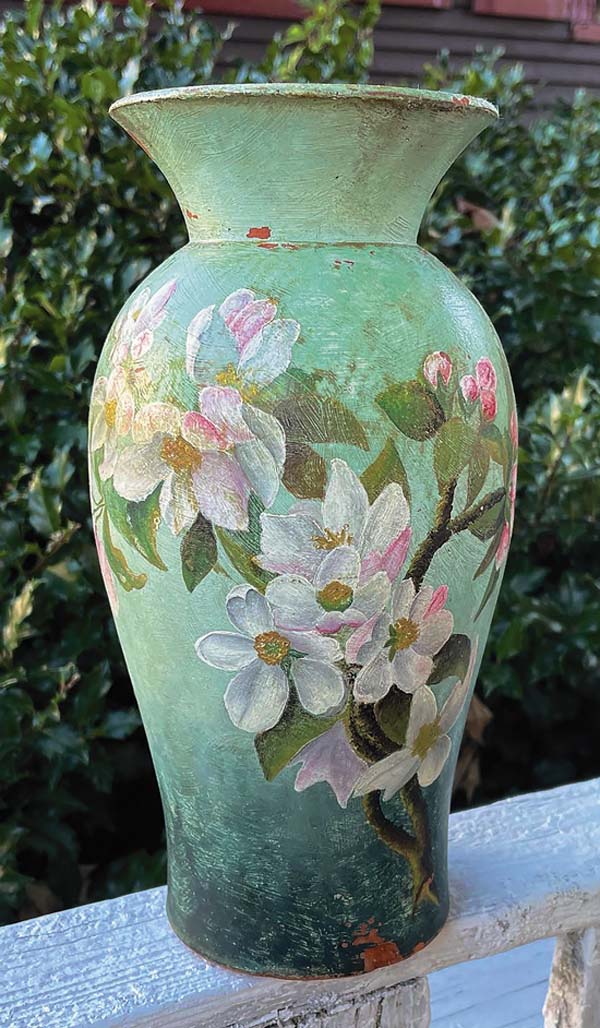
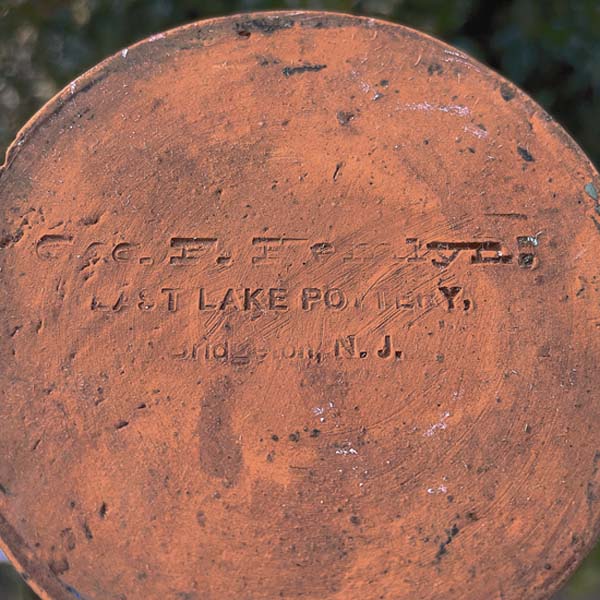
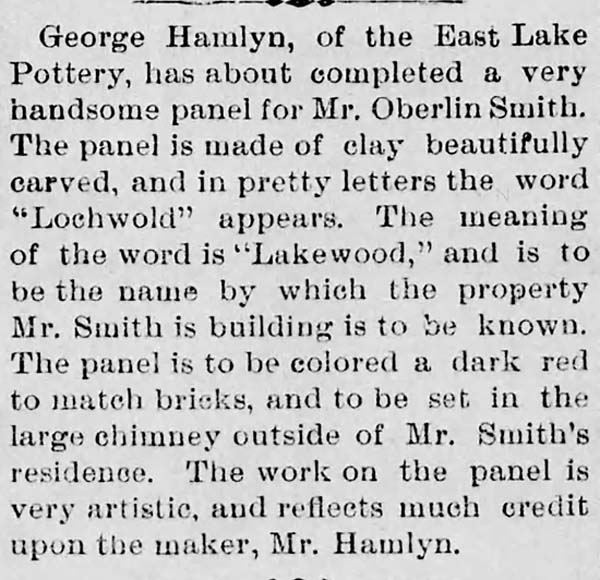
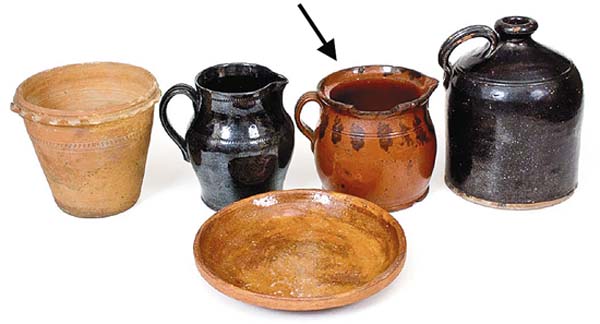
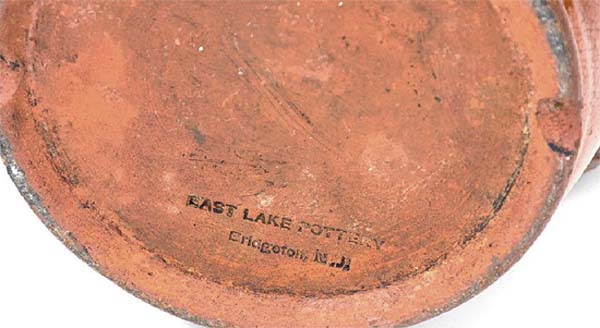
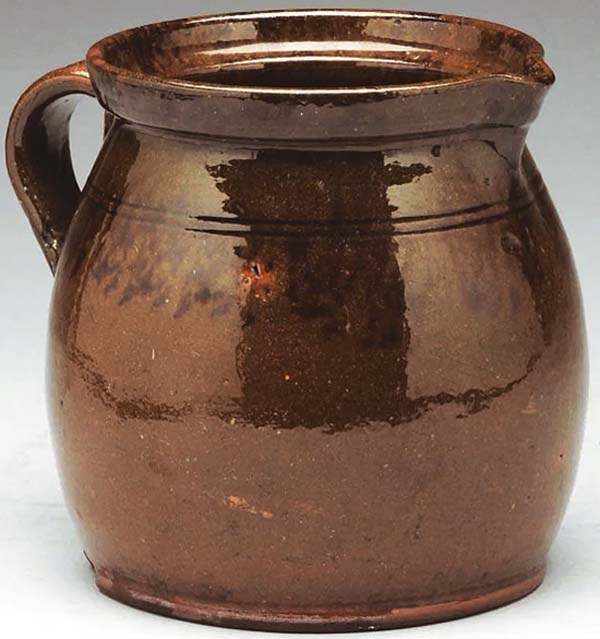
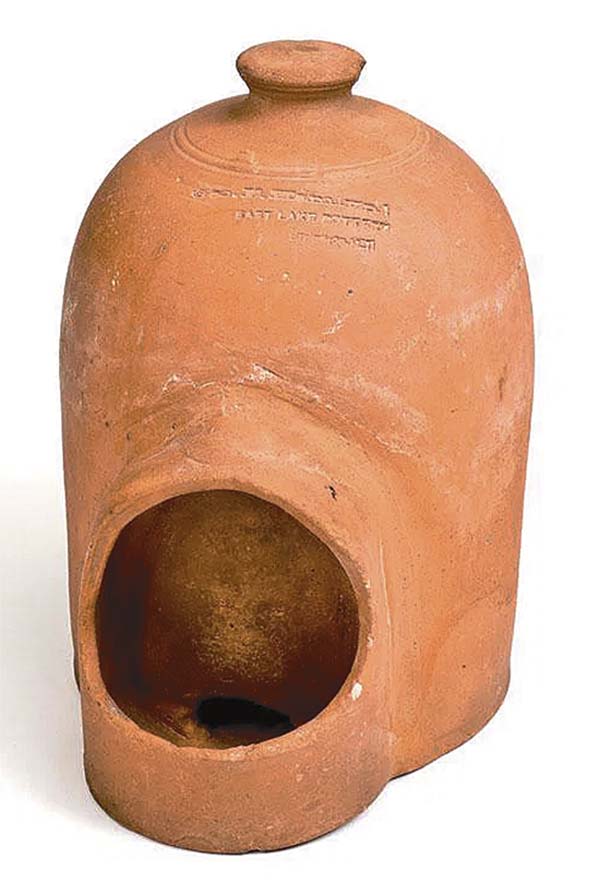
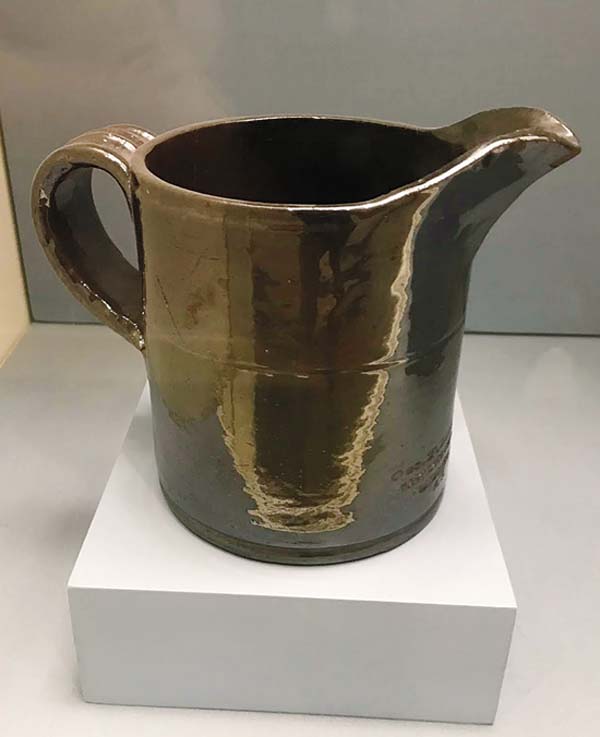
Located about 45 miles to the south of Philadelphia, Bridgeton, Cumberland County, N.J., has a long history of red earthenware and stoneware production, dating back to the early 19th century. The proprietors of the potteries included John Salkeld (1792-1877), George White (1804-1892) and William Smith (1836-1909). There were a group of potters employed at these businesses through the decades. Some of the household production in Bridgeton was comparable to red earthenware and stoneware produced in southeastern Pennsylvania and Philadelphia about the same period, both in form and glaze. In particular, Smiths pottery was known for a variety of functional household forms, as well as figural pieces. An account of when the William J. Smith Pottery was still in operation was published in 1895 in Art Issue of the Bridgeton Evening News reading In the earthenware department can be found bread pans, high pots, pie dishes, pipkins, bean pots, etc.Mr. Smith carries an immense stock of flower-pots, both earthen and terra-cotta, from two to sixteen inches, sold by the piece or thousandsPigeon nests and poultry founts are always kept on handThe stoneware department is also very large, having in stock jars, jugs, butter pots, milk pans, etc. The jars and pots run as high as six gallonsHe also has seconds at very low figures. However, of all the businesses that operated in Bridgeton, one of the most interesting went by the name of East Lake Pottery in the late 19th and early 20th century. This company was established by George Francis Hamlyn (1849-1923), who was born in Philadelphia, and he may have trained there, as well. His father and mother, William (1823-1889) and Eliza Hamlyn (1830-1886), migrated to Philadelphia from England before 1849, and Hamlyn is listed as a 30-year-old potter working in Haddonfield, N.J., in the 1880 United States Federal Census. The following statement was published in the The Clay Record in Chicago on April 29, 1905 (because some Haddonfield pottery was shipped to Chicago): The Haddonfield (N.J.) Pottery, the oldest in New Jersey, is a thing of the past. Work at this plant was carried on continuously for 100 years, commencing on March 15, 1805, by John Thompson. Little is known about Thompsons career, although he seems to have taught Richard W. Snowden (1791/1792-1868), who was born in New Jersey, the potters trade. Snowden eventually acquired Thompsons business around 1816, where his family then produced red earthenware until the early 1880s. Snowden died in 1868, but his son Richard Snowden Jr. (1819/1820-1882/1883) then took ownership of the pottery. The younger Snowden had previously worked for his father, where he first appears as a potter in Haddonfield in the 1860 United States Federal Census. He may have been working for his father for years, but this appears to be the first time that he is credited with the profession of potter. It was a few years after the Snowden Pottery closed that Haddonfield became known for red earthenware and stoneware produced by the Wingender family, which continued well into the 20th century. But Hamlyn appears to have found some work in Haddonfield before he was listed for the first time in Bridgeton in the 1883-1884 Cumberland County City Directory. In the 1889-1890 Cumberland County City Directory, there was an advertisement that lists Hamlyn as the proprietor of the East Lake Pottery in southern New Jersey. It states that he is a Manufacturer and Dealer in Stone, Earthen, Rockingham, and Terra Cotta Ware, Wholesale and Retail. Artistic and Unique Designs in Fancy Pottery made to order. Some of the utilitarian wares produced at Hamlyns business include forms that closely resemble styles manufactured in Philadelphia, such as some pitchers, as well as poultry founts and garden wares. There was also a variety of decorative wares that were cold painted after they were fired in the kiln. It is unclear if the business employed an artist to create the painted designs like other companies of the period, such as Galloway & Graff in Philadelphia and the Speese Pottery in Gettysburg, etc. One hand-painted example was recently discovered in an apartment in Manhattan adorned with skillfully applied dogwood flowers. The form of the vase appears to be an ancient shape, which was a popular style in America during this period. The base is impressed Geo. F. Hamlyn / East Lake Pottery / Bridgeton, N.J. The use of the dogwood flower was also a popular type of decoration used in the 1880s through early 1900s at some art potteries in Ohio; at the Newcomb Pottery in New Orleans, La.; and at least one flowerpot made by Edward Singer (1850-1909) in Bucks County, Pa., among others. The Kousa Dogwood blossom was a motif also used by Mildred Keyser in the early 20th century at Brookcroft Pottery near Conshohocken, Pa. There has also been a misunderstanding about some of Hamlyns production in past 20th-century publications, suggesting that he was working in Bridgeton during a much earlier period. It is unclear how this information came to be, but it is inaccurate. Perhaps it is a result of some of the household forms appearing earlier in production, such as a metallic black glazed red earthenware pitcher marked East Lake Pottery that is displayed from the Albert Hastings Pitkin (1852-1917) collection at the Wadsworth Atheneum Museum of Art in Hartford, Conn. Additionally, published in the Dec. 8, 1887, issue of the Bridgeton, New Jersey Pioneer was, George Hamlyn, of the East Lake Pottery, has about completed a very handsome panel for Mr. Oberlin Smith. The panel is made of clay beautifully carved, and in pretty letters the world Lochwold appears. The meaning of the word is Lakewood, and is to be the name by which the property Mr. Smith is building is to be known. The panel is to be colored a dark red to match bricks, and to be set in the chimney outside Mr. Smiths residence. The work of the panel is very artistic, and reflects much credit upon the maker, Mr. Hamlyn. Oberlin Smith (1840-1926) was born in Cincinnati, Ohio, on March 22, 1840, relocating to Bridgeton about 1860, when he is listed as a 20-year-old machinist in the 1860 United States Federal Census. Later censuses list him as a mechanical engineer in Bridgeton after he founded the Ferracute Machine Company in 1863. There were also glass and sewing factories in Bridgeton in the 1800s. Smiths company then exhibited as part of the Machine Building at the Centennial Worlds Fair in Philadelphia in 1876, launching his company on the worlds stage. He was also one of the early and active members of the American Society of Mechanical Engineers (ASME), joining the society in 1881, within a year of its founding, and in 1889, he was elected its ninth president. In 1910, at the age of 61, Hamlyns occupation is listed as pottery manager in the United States Federal Census in Bridgeton, indicating that the East Lake Pottery likely existed for at least a few decades. A statement published in the Aug. 24, 1917, issue of The News of Cumberland County read, The old two-story building on East Avenue, just north of Commerce Streetis being torn down. The old structure for many years the plant of the East Lake Pottery, operated by George F. Hamlyn, and previous to that had been a blacksmith shop. Hamlyn died on May 2, 1923, in Bridgeton, at the age of 73, and he was buried at Overlook Cemetery in Bridgeton. His obituary was brief and did not mention the pottery business: Relatives are respectfully invited without further notice to attend the funeral service at his late residence, 68 Mill Street, on Saturday afternoon, May 5th, at 2:30 p.m. Interment at Overlook Cemetery. Sources Branin, M. Lelyn. The Early Makers of Handcrafts Earthenware and Stoneware in Central and Southern New Jersey. Cranbury, N.J.: Associated University Presses, 1988. Kirby, William B. Art Issue of the Bridgeton Evening News. Bridgeton, N.J.: News Job Printing House, 1895. Thomas, Justin W. The Wingender Family Pottery Of Haddonfield, N.J. Antiques & Auction News, Nov. 1, 2024.

Share & Print






SHARE
PRINT