Two-Day Catalog Sale Reflects Changing Marketplace Standing-Room-Only Sale At Horst Does Well
By Karl Pass - January 23, 2026
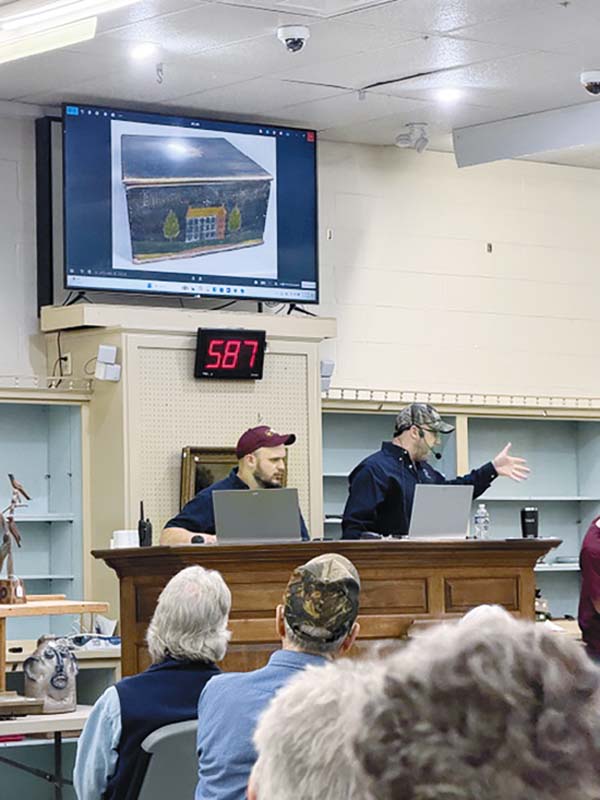
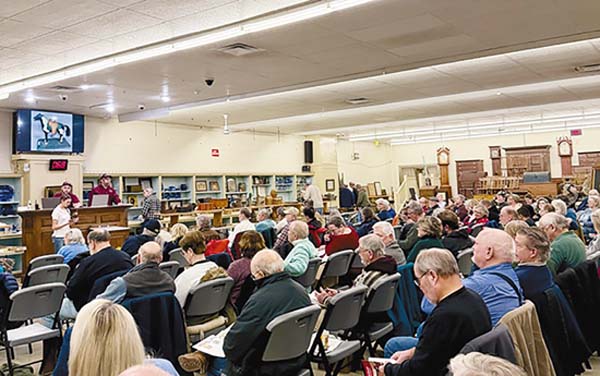
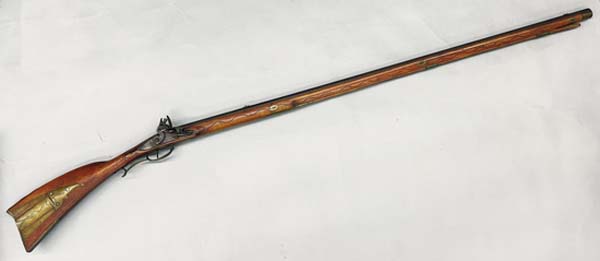
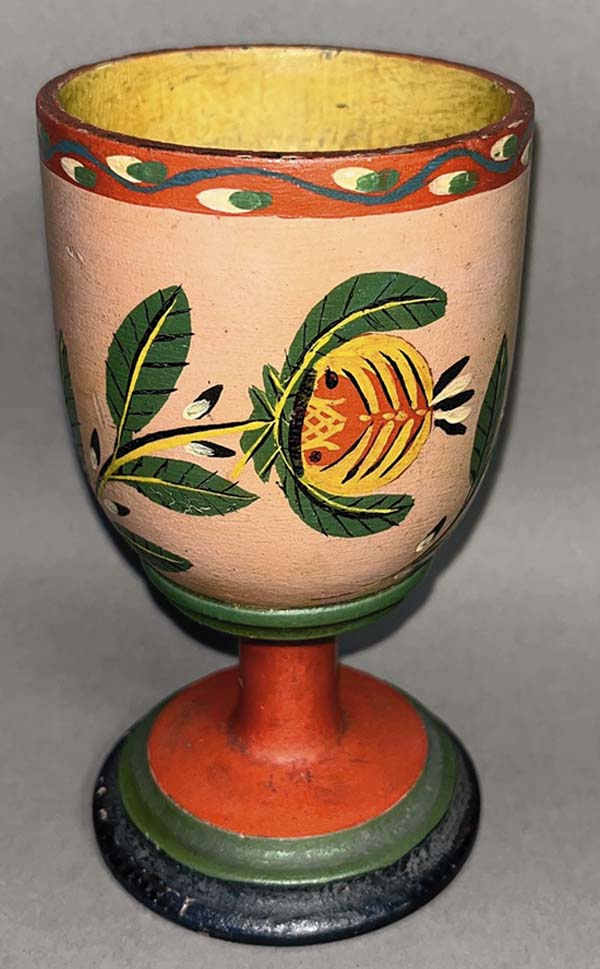
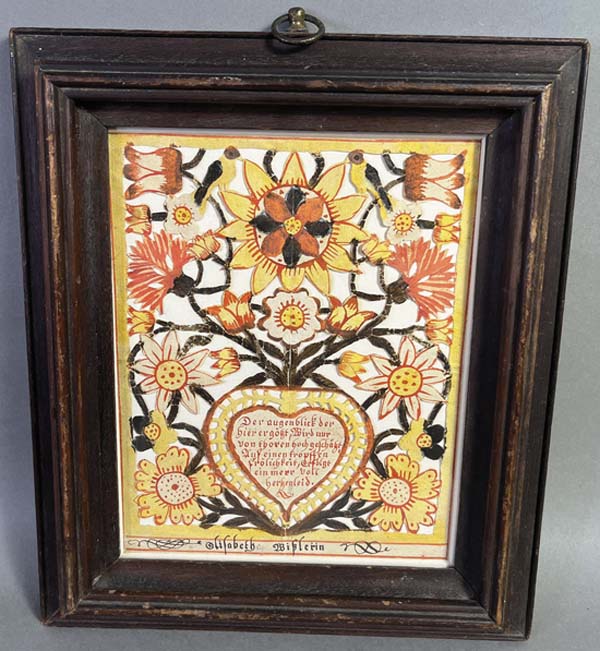
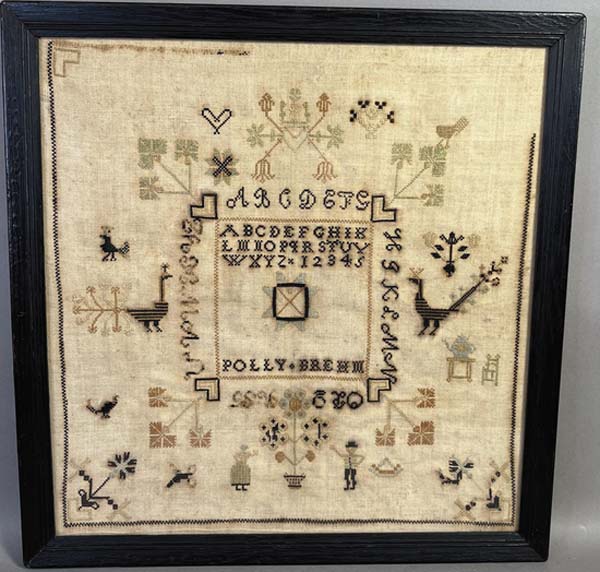
A new year in the auction world, a year in which the nation will recognize the 250th anniversary of the signing of the Declaration of Independence, kicked off Jan. 2 and 3. Horst Auction Center in Ephrata held a 845-lot quality antique sale grossing $317,105. Prices noted are hammer prices. Horst does not charge a buyers premium. There is a 10 percent premium for online bidding through HiBid.com and 10 percent premium for absentee bids. The two main consignors were Fred and Ruth Buch of Ephrata and the estate of John David Wissler of Millway. About 40 percent of the material, the bulk of the English ceramics and fraktur, were from the Buchs, who attended the sale, and another 40 percent, most of the folk art, such as the wood carvings, and Lehnware, belonged to the late Wissler, known to many as J.D. Fred Buch was an organist in Ephrata and supporter of the Mt. Gretna Historical Society. A local collector, no stranger to a Horst sale, he was a direct descendant of Jacob Bentz (1769-1847), the uncle of fraktur artist Samuel Bentz. In folk art circles today, Samuel (1792-1850) is known for creating vivid birth and baptism (taufshein) records. He was the head schoolmaster at the Weidmansville School (now referred to as Wood Corner School). The school house still stands and is very close to Horst Auction Center. He was a bachelor who made extra money by making these hand-drawn highly-stylized certificates (fraktur). Samuels father Peter Bentz was an itinerant pastor in the Lutheran Church. Among the parishes he served was the Strasburg Lutheran church from 1795-1801. He tragically took his own life in 1802. At that time, 10-year-old Samuel moved to live with his fathers brother Jacob Bentz near Weidmansville, which is about two miles west of Ephrata. Incredibly artistic, the talented fraktur artist with a distinctive color palette incorporated red and black geometrical designwork, often urns and spheres. A Bentz taufshein for Matilda Bollinger (1833) diamond border, center text block, floralwork, red and black spiral orbs, some restoration, sold for $2,000. It brought $1,900 in 2016 at Pook & Pook. One for Susanna Hacker (1828) with central text block flanked by large red diamonds and elaborate columns and orbs realized $1,600. It had some staining and a tear. A Bentz taufshein for Susannas younger sister, Catharina Hacker (1827), sold for $22,000 (hammer price) in 2022 at the Don and Trish Herr sale held at Pook & Pook. Both sisters were baptized by the same pastor, Wilhelm Bates. The Herr sale was a barn burner. They were well-known figures in the SE PA antiquing community. Besides Bentz fraktur, the Buchs collected Historical Blue Staffordshire transferware specializing in the Landing of Lafayette series. A famous pattern, produced in England, ca. 1825, by James and Ralph Chews, the scenes depict Marquis de Lafayettes famous 1824 return in New York City. A critical figure during the American Revolution, the arrival and tour was celebrated in mass as the young nation recognized his war service. It was a widely collected pattern in the American market. This commemorative pattern was one of the more common ones, but still very nice and interesting that it was included on so many forms, noted dealer specialist Dave Kurau. The early English Pearlware was also consigned by the Buchs. Not as widely popular as generations ago, there is great opportunity to enter the market for most English ceramics. Forever a collector, former Horst cataloger Clarence Spohn was a big buyer of the Historical Blue china, which was spread out over both days. The passing of J.D. Wissler last year was unexpected and a loss to the community. An artist, collector, and historian, Wissler was well-liked, and his death is still being felt. None of his own paintings were included in the sale. Some high end items were from the Wissler estate, such as the Lehnware, which did well. Joseph Lehn (1798-1892) is known for his painted woodenwares, made ca. 1860-1880. A small painted peony flower decorated footed wooden chalice attributed to William Heilig and painted by Joseph Lehn, excellent condition, sold to a collector in the salesroom for $2,950. Not one to be outbid, the collector said they have about 30 pieces of Lehnware. The same buyer bought the Jonas Weber (1810-1876) paint-decorated (Elizabeth Musselman) lift-top box for $6,000. It is believed the box never had feet. A Lehnware finely paint-decorated miniature chest in excellent condition sold for $2,100, a small Lehnware wooden master salt with strawberry pattern and typical pussy willow border was $1,850, and a small Lehnware egg cup with strawberry pattern sold for $2,000. The same amount ($2,000) was paid for a Lehnware lidded saffron cup with excellent paint. Also from the Wissler estate was a Jacob Botz watercolor and cut-work fraktur for Elisabeth Wissler, ca. 1790-1805, realizing $2,700 going to the trade. Included in Clarke Hess book Mennonite Arts, the fraktur sold on April 27, 2019, for $8,500 at Horst during the Clarke Hess estate sale. In 1991, Hess had now retired conservator Franklin Shores conduct some restoration and encapsulation. The question arises, why did it bring one third the price? Just like the previously mentioned Bentz fraktur, there are always multiple layers to the question, and no price comparison is black and white. I sat with J.D. and his mother at Hess sale, and he was determined to bring the family piece home. Second, the underbidder was the Lancaster Mennonite Historical Society, a benefactor of Hess estate and hence volume buyer at the sale. So, context plays a role, and an appraiser may or may not have a full slate of information when analyzing price histories. Same goes for the average market watcher. On day two, a grouping of antique firearms sold consigned by the granddaughter of John Gideon Laidacker (1867-1927), a noted major collector. A cased set of LePage percussion dueling pistols, early 1800s, matched set of .52 caliber, sold for $5,000. LePage was a famous Paris gunmaker in the early 1800s. Some early long rifles were not overlooked and found eager buyers. Extremely rare, a Pennsylvania German embroidered wedding day handkerchief, ca. 1820 to 1830, by Polly Brehm, brought $550. The fraternity of Pennsylvania German textiles is different today. The losses of Tandy Hersh, Trish Herr, Fred Weiser, and Clarke Hess not only contracted the market but left a void. They possessed a great deal of intellectual capital in the field. The Jan. 2 and 3 auction witnessed a packed house both days. Some new faces were present while old friends caught up with one another. Some young parents brought children, skewing the typical older demographic. Sales at Horst are friendly and inviting to anyone. What everyone who attends one has in common is an appreciation for history. For additional information, call 717-738-3080.

Share & Print






SHARE
PRINT