You Can Bank On It!
Smack Dab In The Middle: Design Trends Of The Mid-20th Century
By Donald-Brian Johnson - October 30, 2026
Every now and then, I wonder whether “what people do” influences “what people collect.” Well, sometimes. Take my dad, for instance. He was a banker, and he collected toy banks. From what I’ve gathered, my mom picked up my dad’s first bank at an antiques show, when the well of other gift-giving possibilities had pretty much run dry. When my dad enthused over it, the die was cast. From then on, for every special occasion, my dad could count on receiving at least one toy bank. Eventually, what started out as “the music room” at their home was transformed into “dad’s toy room.” Packed shelves displayed his assortment of mechanical marvels. First-time visitors got the full toy room tour, complete with enthusiastic narrator.
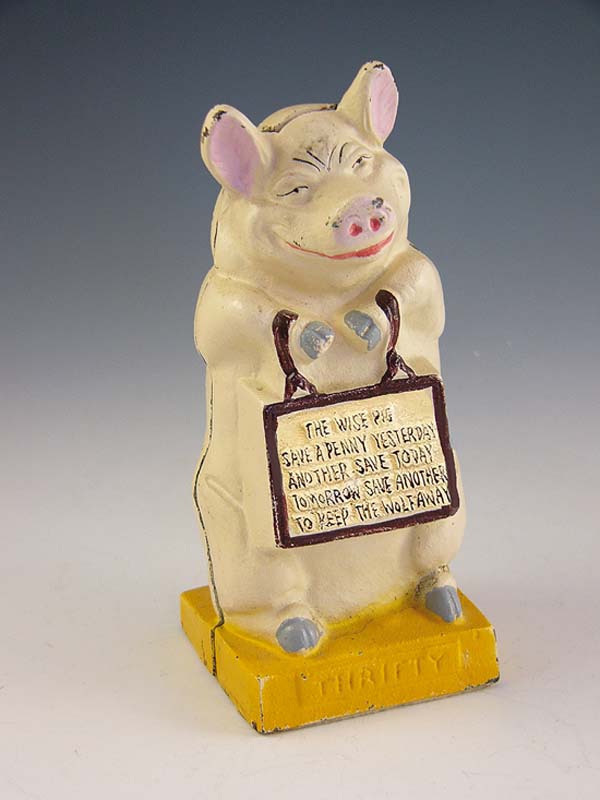
Essentially, there are two types of toy banks: “still” banks, which just take your money and sit there waiting for more, and “mechanical” banks, which throw in a little show with each deposit. The best-known (and longest-lived) of the “stills” is the beloved “piggy bank.” If you were lucky, your ceramic pig-shaped bank had a rubber plug in the base, so you could empty it out when in dire need of dimes. If your parents were less trusting, your piggy bank had no such opening. When the alluring bell of the ice cream truck rang, the only way to cash in was with a hammer.
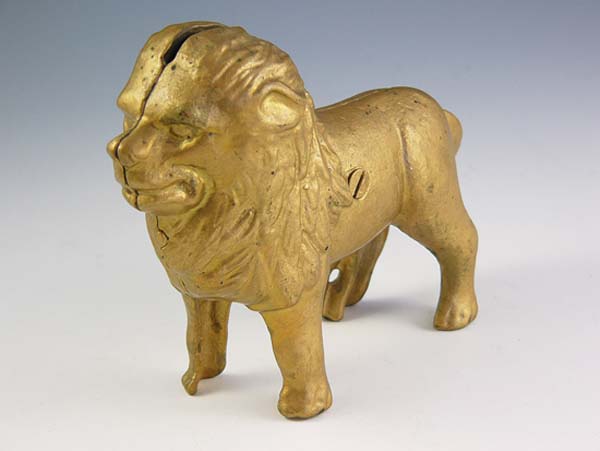
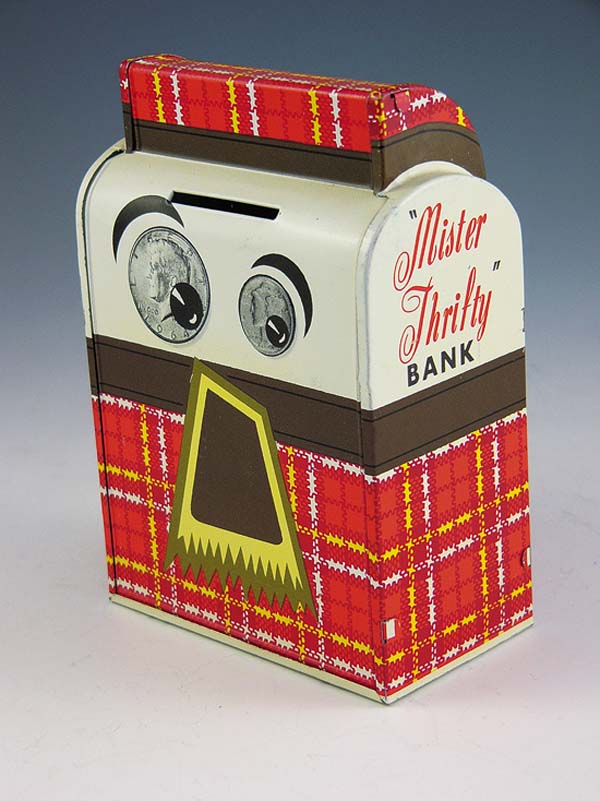
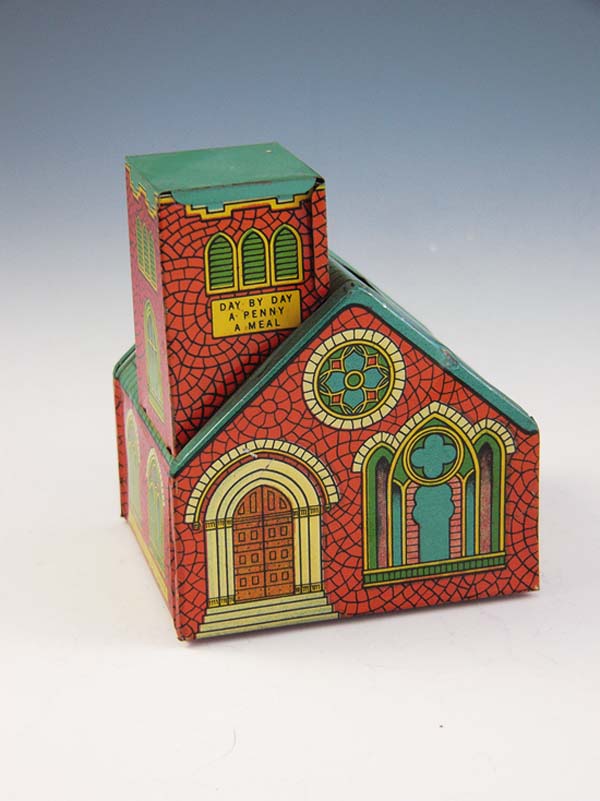
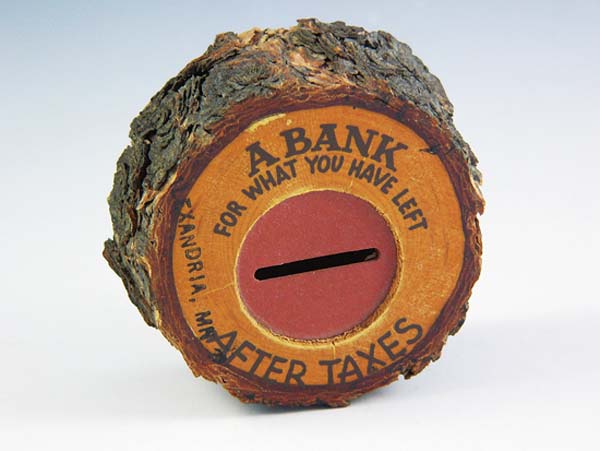
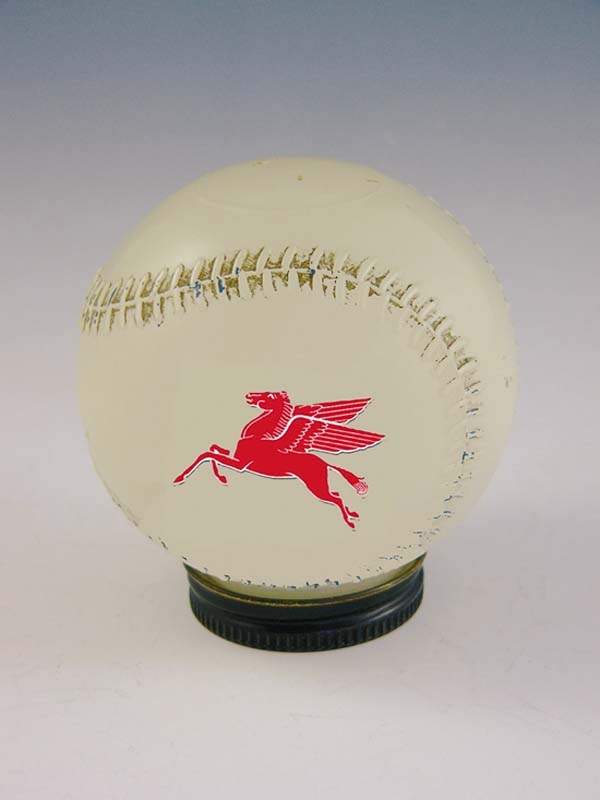
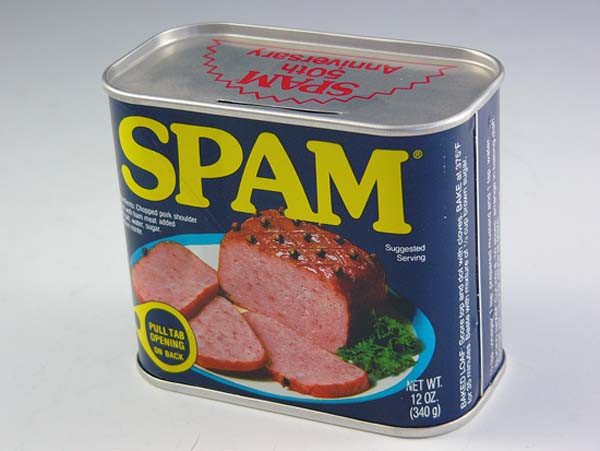
No one really knows why pigs proved such an enduring motif. Germany (where piggy banks dating from the 13th century have been discovered) has one answer: there, pigs were a symbol of good fortune. But over the centuries, pigs have been joined by still banks with a multitude of themes. There are still bank buildings (including, you guessed it, real banks); pop culture stills (lots of Disney there); and mini-replicas of objects people were already used to putting money in, like slot machines and jukeboxes. Ceramic banks were joined by banks fashioned of cast iron, tin, glass, plastic, and rubber. In the mid-20th century, businesses hit on still banks as an effective advertising medium. Plaster your name on that tiny covered wagon or that wise old owl, and folks would keep you in mind every time they saved a penny earned.
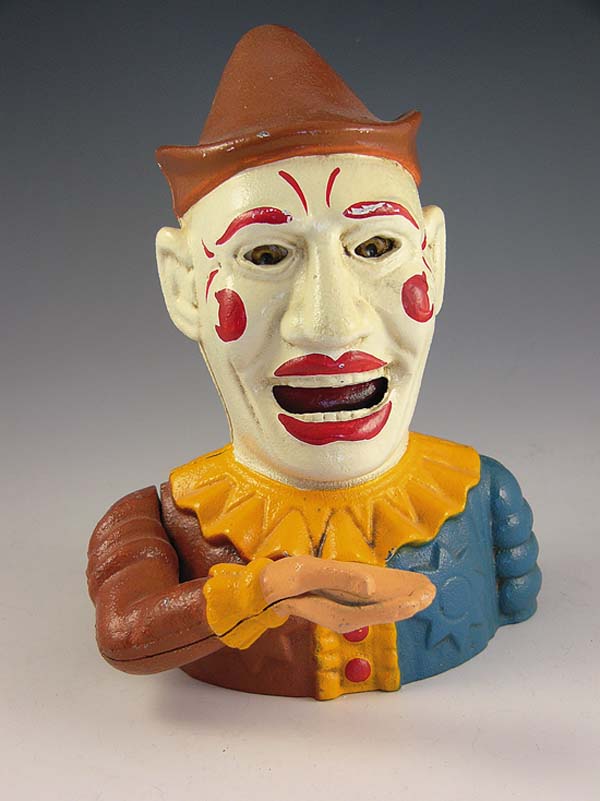
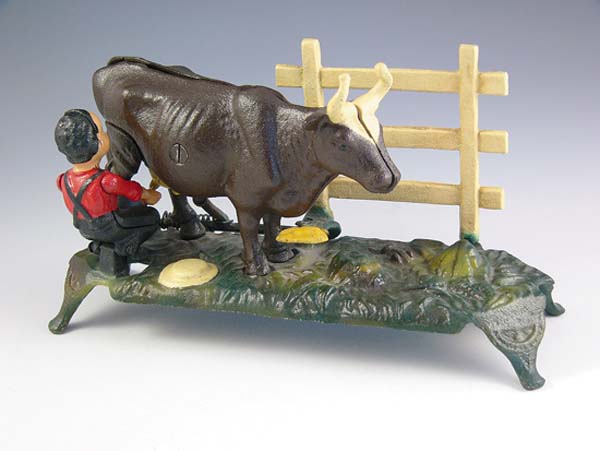
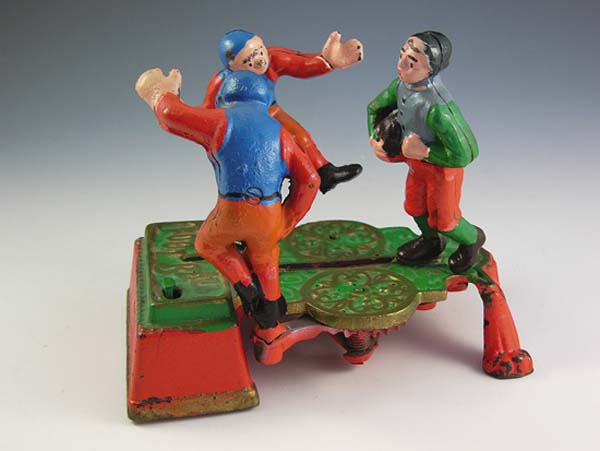
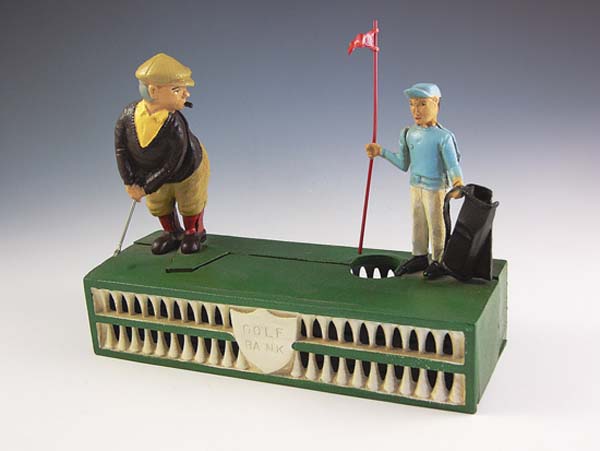
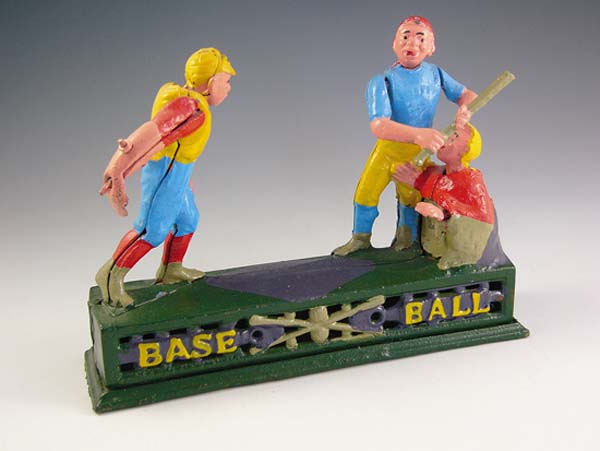
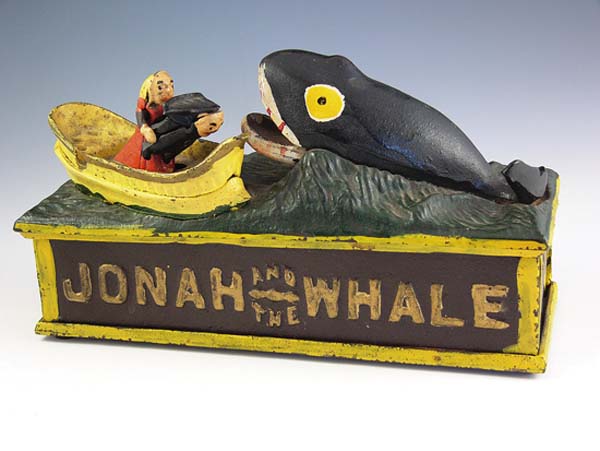
But let’s face it: still banks didn’t do anything. That was the domain of their pricier cousins, the mechanical banks. Put a penny in the hand of that jolly circus clown, and watch him stick out his tongue, swallow down the penny, and even roll his eyes! Put a penny in “Teddy Roosevelt’s” rifle, and when he “shoots” at a tree stump, a bear’s head pops out! In the U.S., the first cast-iron mechanical bank was patented in 1869. During their heyday, which lasted until the 1930s, mechanical banks delighted kids of all ages with their coin-driven shenanigans.
Cast-iron construction protected the interior springs and exterior levers necessary to prompt a mechanical into action. Almost all cast-iron banks were cold-painted, meaning that on older ones, the paint is likely to have worn off in spots. Serious collectors advise not “touching up” damaged paint, as it will decrease value. However, rusty or broken springs can (and sometimes should) be replaced, to get that boisterous bronco kicking up his heels once again.
Mechanical bank originals in excellent condition from the 1800s command stratospheric prices, while reproductions from the 1930s register much lower. More affordable are banks in the “Book of Knowledge” series, released in the 1950s. These excellent reproductions are clearly marked, and sell in the mid-hundreds. Taiwanese and other imports usually sell for much less. As for still banks, although some cast-iron versions sell in the low hundreds, those mass-produced and made of other materials are generally under $50. When in doubt, a reputable dealer is your best guide.
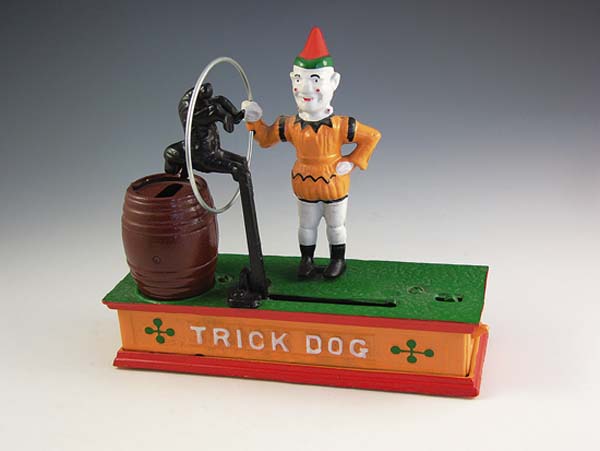
Now if you’ll excuse me, I’ve got a handful of pennies, and want to see if I can get dad’s “Trick Dog” to jump through its hoop!
Photo Associate: Hank Kuhlmann.
All Photos by Donald-Brian Johnson.
Donald-Brian Johnson is the co-author of numerous Schiffer books on design and collectibles, including “Postwar Pop,” a collection of his columns. Please address inquiries to: donaldbrian@msn.com.
Share & Print






SHARE
PRINT